When Is Thyroid Surgery Needed?
Thyroid surgery is recommended for several conditions affecting the thyroid gland, a butterfly-shaped endocrine gland located at the base of the neck that produces hormones essential for regulating metabolism, energy, growth, and development. The most common indication for thyroid surgery is thyroid nodules, which are extremely prevalent, occurring in up to 50 percent of the adult population when detected by ultrasound. While the vast majority of thyroid nodules are benign, approximately 5 to 15 percent are malignant, and fine-needle aspiration biopsy cannot always definitively determine the nature of a nodule, leading to surgical recommendation for diagnostic purposes. Thyroid cancer, the fastest-growing cancer diagnosis in many developed countries, requires surgical removal of part or all of the thyroid gland, often followed by radioactive iodine therapy and thyroid hormone suppression therapy.
Multinodular goiter, where the thyroid gland becomes enlarged with multiple nodules, may require surgery when the enlargement causes compression symptoms including difficulty swallowing, breathing obstruction, hoarseness, or a visible and cosmetically bothersome neck mass. Graves' disease, the most common cause of hyperthyroidism, may require thyroidectomy when antithyroid medications fail to control the condition, when the patient cannot tolerate medication side effects, or when the patient prefers a definitive surgical cure over lifelong medication or radioactive iodine treatment. At international surgical centers like Acıbadem Maslak Hospital, comprehensive pre-operative evaluation including ultrasound, fine-needle aspiration biopsy, thyroid function tests, and laryngoscopy ensures that the correct surgical approach is planned for each patient's specific condition.
The cost of thyroid surgery in the United States ranges from $8,000 to $25,000 depending on the extent of the procedure, with total thyroidectomy being more expensive than partial (lobectomy) due to the longer operating time and potentially extended hospital stay. These costs include surgeon fees, anesthesia, operating room charges, and hospital stay but may not include pre-operative imaging, biopsy, pathology charges, and post-operative thyroid hormone medication. International surgical centers offer the same procedures at 60 to 80 percent lower cost, performed by experienced endocrine surgeons using modern techniques including intraoperative nerve monitoring to protect the recurrent laryngeal nerves that control voice function. The combination of experienced surgeons, advanced safety technology, and competitive pricing makes thyroid surgery abroad an increasingly attractive option.

Types of Thyroid Surgery
Thyroid lobectomy (hemithyroidectomy) involves removal of one lobe of the thyroid gland along with the isthmus connecting the two lobes. This procedure is appropriate for benign thyroid nodules confined to one lobe, indeterminate or suspicious nodules requiring definitive diagnosis, low-risk papillary thyroid microcarcinomas (under 1 cm), and certain cases of autonomous toxic adenoma causing hyperthyroidism. The advantage of lobectomy is that it preserves the function of the remaining lobe, often eliminating the need for lifelong thyroid hormone replacement. Approximately 70 to 80 percent of patients who undergo lobectomy maintain adequate thyroid function with the remaining lobe, though the remaining percentage will require supplementation.
Total thyroidectomy removes the entire thyroid gland and is indicated for bilateral thyroid disease, confirmed thyroid cancer larger than 1 cm, aggressive thyroid cancer subtypes, Graves' disease, and large multinodular goiter affecting both lobes. Total thyroidectomy necessitates lifelong thyroid hormone replacement therapy, as the body can no longer produce its own thyroid hormones. However, for thyroid cancer patients, total thyroidectomy offers the advantage of enabling postoperative radioactive iodine therapy, which can only be effective when all normal thyroid tissue has been removed, and facilitating cancer surveillance through thyroglobulin monitoring. At hospitals like Memorial Şişli Hospital, the surgical team has extensive experience with both approaches and counsels patients on the optimal extent of surgery based on their specific diagnosis and risk profile.
Minimally invasive and scarless thyroid surgery techniques have advanced significantly, offering patients improved cosmetic outcomes while maintaining the same oncological safety as traditional open surgery. Minimally invasive video-assisted thyroidectomy uses a small (1.5-2 cm) incision with endoscopic magnification. Transoral endoscopic thyroidectomy vestibular approach eliminates any visible neck scar by accessing the thyroid through small incisions inside the lower lip. Robotic transaxillary thyroidectomy uses a da Vinci robotic system through an incision hidden in the armpit. While not available at all centers, these advanced approaches are offered at select international facilities for appropriate candidates, particularly those with small nodules or cancer who prioritize cosmetic outcomes.
- Thyroid lobectomy — removal of one lobe, preserves function in most patients
- Total thyroidectomy — complete gland removal for cancer or bilateral disease
- Completion thyroidectomy — removal of remaining lobe after initial lobectomy
- Subtotal thyroidectomy — near-total removal leaving small thyroid remnant
- Minimally invasive thyroidectomy — small incision with endoscopic assistance
- Transoral thyroidectomy — scarless approach through the mouth
- Robotic thyroidectomy — robotic-assisted surgery through hidden incision
Cost Comparison by Country
Thyroid Surgery Cost Comparison 2025
| Country | Partial Thyroidectomy | Total Thyroidectomy | Savings vs USA |
|---|---|---|---|
| USA | $8,000 - $15,000 | $12,000 - $25,000 | — |
| Turkey | $2,500 - $5,000 | $4,000 - $8,000 | Up to 70% |
| India | $1,500 - $3,500 | $2,500 - $6,000 | Up to 78% |
| Thailand | $3,000 - $5,500 | $4,500 - $8,500 | Up to 65% |
| Mexico | $2,500 - $5,000 | $4,000 - $8,000 | Up to 68% |
| South Korea | $4,000 - $8,000 | $6,000 - $12,000 | Up to 52% |
| Germany | $5,000 - $10,000 | $8,000 - $16,000 | Up to 40% |
Prices include surgeon fees, anesthesia, hospital stay (1-2 nights), and pathology. Radioactive iodine treatment, if needed for thyroid cancer, is additional.
Turkey offers excellent value for thyroid surgery, with lobectomy available for $2,500 to $5,000 and total thyroidectomy for $4,000 to $8,000 at leading hospitals. Acıbadem Maslak Hospital provides comprehensive thyroid surgical services including pre-operative ultrasound and biopsy, surgery with intraoperative nerve monitoring, one to two nights of hospital stay, pathology analysis, and post-operative follow-up. The hospital's endocrine surgery team works closely with endocrinologists and nuclear medicine specialists to provide integrated care for thyroid cancer patients who may require additional treatment beyond surgery.
Need thyroid surgery? Get free quotes from experienced endocrine surgeons at accredited international hospitals.
Get Free QuoteBest Hospitals for Thyroid Surgery Abroad
Acıbadem Maslak Hospital provides comprehensive thyroid surgical services with experienced endocrine surgeons who perform high volumes of thyroid procedures annually. The hospital's surgical suite is equipped with intraoperative nerve monitoring systems, precision energy devices for hemostasis, and frozen section pathology capability for immediate intraoperative diagnosis. Memorial Şişli Hospital and Anadolu Medical Center offer additional excellent options, each with strong endocrine surgery programs and multidisciplinary thyroid teams. Acıbadem Taksim Hospital provides convenient central Istanbul access, while Acıbadem Kent Hospital in İzmir extends the geographical options for patients who prefer Turkey's Aegean coast.
Nerve Monitoring & Safety in Thyroid Surgery
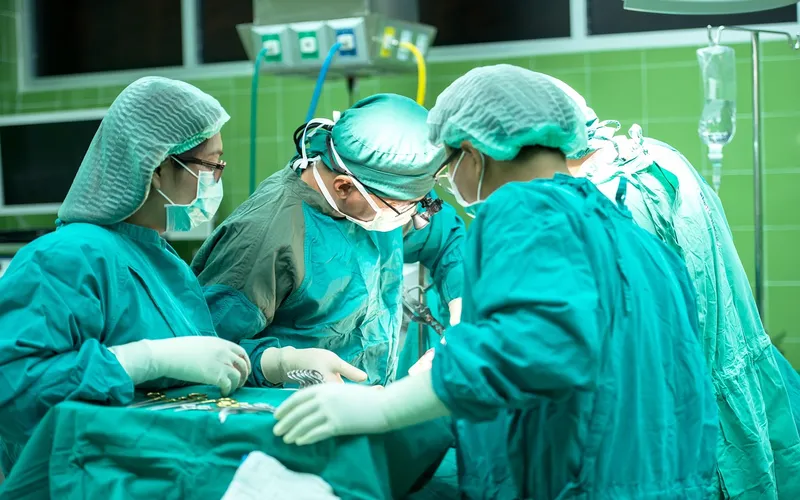
Protection of the recurrent laryngeal nerves is the most critical safety concern during thyroid surgery. These nerves, which run on either side of the thyroid gland and control the vocal cords, can be injured during surgery, resulting in voice hoarseness or, in the case of bilateral injury, breathing difficulty requiring tracheostomy. The risk of permanent recurrent laryngeal nerve injury is approximately 1 to 2 percent at experienced centers, but can be higher with less experienced surgeons or in complex revision cases. Intraoperative nerve monitoring has become standard practice at leading surgical centers worldwide and involves placing a special endotracheal tube with electrodes that contact the vocal cords, connected to a monitoring system that provides real-time audible and visual feedback when the nerve is stimulated during surgery.
The external branch of the superior laryngeal nerve is another important structure at risk during thyroid surgery. This nerve controls the tension of the vocal cords and is important for voice projection and pitch modulation. Injury to this nerve, which occurs in up to 5 to 10 percent of cases if not specifically identified and preserved, can result in voice fatigue, loss of high-pitched sounds, and difficulty with voice projection. At hospitals like Acıbadem Maslak Hospital, routine identification and preservation of both the recurrent laryngeal nerve and the external branch of the superior laryngeal nerve, combined with intraoperative nerve monitoring, minimizes the risk of voice complications and ensures patient safety during thyroid surgery.
Parathyroid gland preservation is another crucial aspect of thyroid surgery safety. The parathyroid glands, four small glands located behind the thyroid, regulate calcium levels in the blood. During thyroidectomy, particularly total thyroidectomy, these glands may be inadvertently removed, devascularized, or damaged, leading to hypoparathyroidism and low blood calcium levels requiring calcium and vitamin D supplementation. Experienced thyroid surgeons use careful dissection technique, visual identification of the parathyroid glands, and in some cases autotransplantation of inadvertently removed parathyroid tissue into the neck muscles to preserve function. The rate of permanent hypoparathyroidism at experienced centers is typically less than 2 percent, reflecting the importance of surgical expertise in thyroid surgery outcomes.
Recovery & Outcomes
Recovery from thyroid surgery is generally swift and well-tolerated. Most patients experience mild to moderate neck discomfort for the first few days, managed effectively with oral analgesics. The incision, typically 3 to 5 cm in length placed in a natural skin crease low on the neck, heals with minimal visible scarring in most patients. Hospital stay is one to two nights for total thyroidectomy and often same-day discharge for lobectomy. Patients can typically return to desk work within one to two weeks and to physically demanding activities within three to four weeks. Voice changes, including mild hoarseness and voice fatigue, are common during the first few weeks after surgery and usually resolve completely as the recurrent laryngeal nerves recover from the normal surgical manipulation.
Following total thyroidectomy, patients begin lifelong thyroid hormone replacement therapy, typically with levothyroxine, within the first day after surgery. The dosage is adjusted over the first few weeks based on thyroid function blood tests until stable therapeutic levels are achieved. For thyroid cancer patients, the levothyroxine dose is initially set higher than normal replacement levels to suppress TSH (thyroid-stimulating hormone), which can stimulate any remaining thyroid cancer cells. Regular monitoring with blood tests and imaging ensures that hormone levels remain optimal and that there is no evidence of cancer recurrence. At centers like Memorial Şişli Hospital, patients receive comprehensive post-operative education about their medication, follow-up schedule, and warning signs that require medical attention.
I was diagnosed with thyroid cancer and needed total thyroidectomy. The surgery in Istanbul was expertly done with nerve monitoring, and my voice was completely normal within a week. The pathology confirmed the cancer was completely removed. Total cost was one-fifth of the US price.
Jennifer A., thyroid cancer patient from the US
Frequently Asked Questions
Frequently Asked Questions
How long should I stay abroad after thyroid surgery?
Plan for 3-5 days after surgery for recovery and follow-up. Most patients can fly home 3-5 days after thyroidectomy once pathology results are available and recovery is satisfactory. Lobectomy patients may be ready to travel even sooner.
Will I need to take medication after thyroid surgery?
After total thyroidectomy, lifelong thyroid hormone replacement (levothyroxine) is needed. After lobectomy, about 70-80% of patients maintain adequate function without medication. Blood tests at 6-8 weeks post-surgery determine whether supplementation is needed.
Will thyroid surgery affect my voice?
Temporary mild hoarseness is common and usually resolves within 2-4 weeks. Permanent voice changes from nerve injury occur in less than 1-2% of cases at experienced centers using nerve monitoring. Pre-operative and post-operative laryngoscopy helps monitor vocal cord function.
How visible will the scar be?
The standard thyroidectomy incision is placed in a natural skin crease and typically measures 3-5 cm. With good wound care and scar management, it becomes barely visible within 6-12 months. Minimally invasive and scarless techniques are available at select centers for appropriate candidates.
Can thyroid cancer be completely cured?
Most thyroid cancers (papillary and follicular types) have excellent cure rates exceeding 95% with appropriate surgery and radioactive iodine treatment when indicated. Long-term follow-up with blood tests and ultrasound is needed to monitor for recurrence, but the overall prognosis is very favorable.