What Is a Hernia?
A hernia occurs when an organ or fatty tissue protrudes through a weakness or opening in the surrounding muscle wall or connective tissue (fascia) that normally contains it. Hernias are extremely common, affecting an estimated 25 percent of men and 2 percent of women during their lifetime. The most common type is inguinal hernia (occurring in the groin), which accounts for approximately 75 percent of all abdominal wall hernias. Hernias do not resolve spontaneously — once a defect in the muscle wall develops, it typically enlarges over time, and surgical repair is the only definitive treatment.
The development of a hernia results from a combination of muscle weakness (which may be congenital or acquired) and increased intra-abdominal pressure from activities such as heavy lifting, straining during bowel movements, chronic coughing, or pregnancy. Risk factors include age (muscle strength decreases with aging), male sex (inguinal hernias are 8 to 10 times more common in men), family history, previous hernia or hernia repair, obesity, smoking (which impairs collagen synthesis and wound healing), chronic constipation, and occupations involving repetitive heavy lifting or prolonged standing.
Hernia repair is one of the most frequently performed surgical procedures worldwide, with over 20 million hernia operations performed annually. The high prevalence, well-standardized surgical techniques, and relatively short recovery period make hernia repair an excellent candidate for medical tourism. Patients can achieve significant cost savings — typically 70 to 85 percent compared to US prices — while receiving the same high-quality surgical care at accredited hospitals abroad. Modern hernia repair uses lightweight synthetic mesh to reinforce the weakened tissue, resulting in recurrence rates as low as 1 to 3 percent when performed by experienced surgeons at hospitals like Acıbadem Maslak Hospital in Istanbul.
Types of Hernias
Inguinal hernias occur in the inguinal canal, a natural passage in the lower abdominal wall through which the spermatic cord passes in men and the round ligament in women. They are classified as direct (protruding through a weakness in the posterior wall of the inguinal canal, usually in older adults) or indirect (protruding through the internal inguinal ring, following the path of the spermatic cord, more common in younger patients and often associated with a congenital patent processus vaginalis). Inguinal hernias present as a bulge in the groin that becomes more noticeable when standing, coughing, or straining, and may cause discomfort, aching, or a dragging sensation. In men, the hernia may extend into the scrotum.
Umbilical hernias develop at or near the navel (umbilicus) and are common in both adults and children. In children, small umbilical hernias often close spontaneously by age 4 to 5 and typically do not require surgery unless they persist beyond this age, are larger than 1.5 cm, or cause symptoms. In adults, umbilical hernias are associated with obesity, multiple pregnancies, ascites (fluid in the abdomen from liver disease), and heavy lifting. Incisional hernias develop at the site of a previous surgical incision, occurring in approximately 10 to 15 percent of patients after open abdominal surgery. They result from inadequate wound healing and are more common in patients with obesity, diabetes, wound infection, or those who were on corticosteroids at the time of the original surgery.
Hiatal hernias occur when the upper part of the stomach pushes through the diaphragmatic hiatus (the opening in the diaphragm through which the esophagus passes) into the chest cavity. Type I (sliding) hiatal hernias are the most common (95 percent) and are associated with gastroesophageal reflux disease. Type II to IV (paraesophageal) hernias involve herniation of the stomach fundus alongside the esophagus and carry a risk of gastric volvulus (twisting), strangulation, and obstruction — these are considered surgical emergencies if symptomatic and are recommended for elective surgical repair when diagnosed. Other hernia types include femoral hernias (below the inguinal ligament, more common in women), epigastric hernias (in the midline between the navel and sternum), Spigelian hernias (along the lateral edge of the rectus abdominis muscle), and obturator hernias (through the obturator foramen in the pelvis).
- Inguinal hernia: Most common type (75%), occurs in the groin, 8-10x more common in men
- Umbilical hernia: At or near the navel, common in adults with obesity or multiple pregnancies
- Incisional hernia: At previous surgical incision site, affects 10-15% of open surgery patients
- Hiatal hernia: Stomach pushes through diaphragm, associated with GERD, may require specialized repair
- Femoral hernia: Below inguinal ligament, higher risk of strangulation, more common in women
- Epigastric hernia: Upper midline of abdomen between navel and sternum
- Ventral hernia: General term for any hernia through the front abdominal wall
When Is Surgery Needed?
Surgical repair is generally recommended for all symptomatic hernias — those causing pain, discomfort, or functional limitation — and for hernias that are progressively enlarging. The main concern with untreated hernias is the risk of incarceration (when the hernia contents become trapped and cannot be pushed back in) and strangulation (when the blood supply to the trapped tissue is compromised, leading to tissue death). Strangulated hernias are surgical emergencies with significant morbidity and mortality if not treated promptly. The risk of strangulation varies by hernia type: femoral hernias have the highest risk (22 to 45 percent lifetime risk), followed by inguinal hernias (1 to 3 percent per year for symptomatic hernias).
For minimally symptomatic or asymptomatic inguinal hernias in men, a watchful waiting approach may be appropriate, as the risk of acute complications is relatively low (approximately 0.2 to 0.3 percent per year). However, studies show that approximately 70 percent of men initially managed with watchful waiting ultimately require surgery within 7 to 10 years due to increasing symptoms. Umbilical hernias in adults, incisional hernias, and femoral hernias should generally be repaired electively rather than observed due to their higher complication rates. For medical tourists, elective hernia repair is ideal — it allows proper planning, pre-operative optimization, and scheduling at a convenient time, resulting in better outcomes than emergency surgery.
Surgical Techniques: Open, Laparoscopic & Robotic
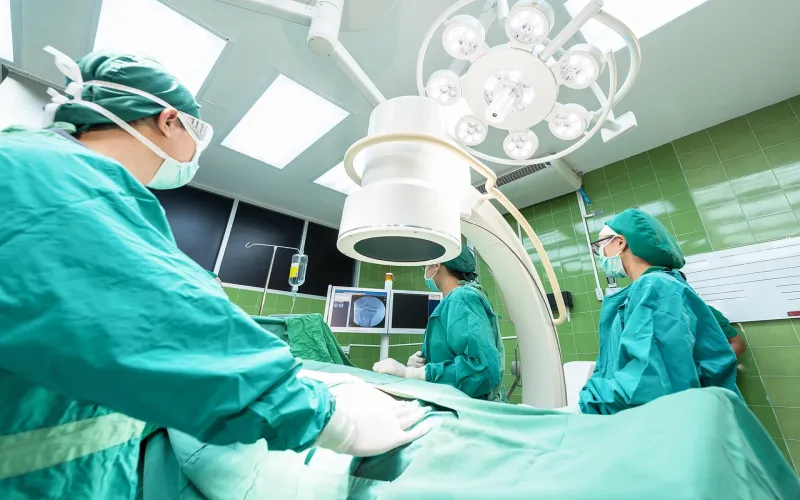
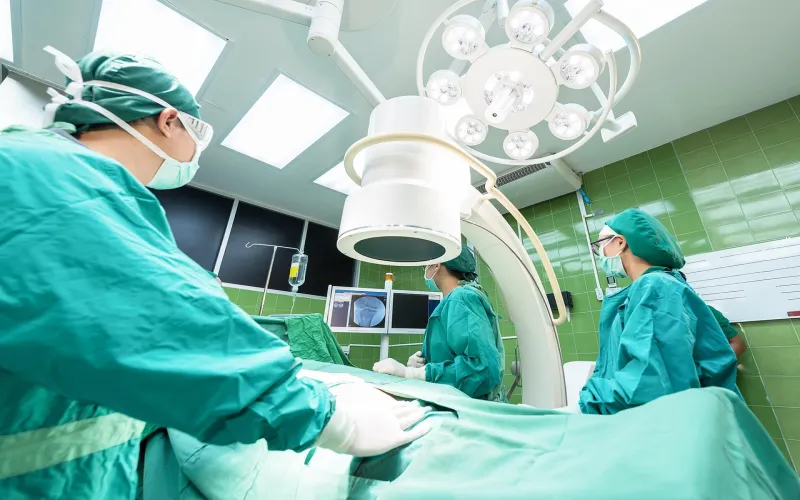
Open hernia repair, the traditional approach, involves a single incision over the hernia site. For inguinal hernias, the Lichtenstein tension-free mesh repair is the most widely performed open technique, involving placement of a flat polypropylene mesh patch over the defect in the inguinal canal floor, secured with sutures. The operation takes 45 to 60 minutes under local, regional, or general anesthesia and can be performed as a day case. Open repair is an excellent option when performed by an experienced surgeon, with recurrence rates of 1 to 4 percent and low complication rates. Its main advantages are simplicity, versatility, and the ability to perform under local anesthesia.
Laparoscopic hernia repair is performed through 3 small incisions (5 to 10mm each) using a camera and specialized instruments. Two main laparoscopic techniques are used for inguinal hernias: transabdominal preperitoneal (TAPP) repair, where the surgeon enters the abdominal cavity, opens the peritoneum, places mesh in the preperitoneal space, and closes the peritoneum over the mesh; and totally extraperitoneal (TEP) repair, where the entire operation is performed in the preperitoneal space without entering the abdominal cavity. Laparoscopic repair offers several advantages over open surgery: less post-operative pain, faster return to normal activities (1 week vs 2 to 3 weeks), smaller scars, and the ability to repair bilateral inguinal hernias through the same incisions. Memorial Şişli Hospital in Istanbul performs high volumes of both TAPP and TEP laparoscopic hernia repairs with excellent outcomes.
Robotic hernia repair uses the same principles as laparoscopic surgery but adds the advantages of three-dimensional visualization, wristed instruments with greater range of motion, and tremor filtration provided by the surgical robot (typically the Da Vinci system). Robotic approach has become increasingly popular for complex hernias including large incisional hernias, bilateral inguinal hernias, and hiatal hernia repairs, where the enhanced visualization and instrument control can facilitate precise dissection and mesh placement. While robotic surgery typically costs more than standard laparoscopic surgery due to the robot's operating costs, the cost premium is significantly smaller at international hospitals compared to the USA.
Hernia Repair Cost Comparison by Country
The cost of hernia repair in the United States varies widely depending on the type of hernia, surgical approach, hospital setting, and geographic location. An inguinal hernia repair costs $5,000 to $15,000 (outpatient laparoscopic) to $10,000 to $25,000 (inpatient at a hospital), while hiatal hernia repair ranges from $15,000 to $30,000 or more. These figures include surgeon fees, anesthesia, facility charges, mesh costs, and post-operative care. With high-deductible insurance plans, many patients face out-of-pocket costs of $3,000 to $8,000 even with coverage, making the savings from medical tourism significant even after accounting for travel expenses.
Hernia Repair Cost Comparison by Country 2025
| Country | Inguinal Hernia (Laparoscopic) | Hiatal Hernia Repair | Savings vs USA |
|---|---|---|---|
| USA | $5,000 - $15,000 | $15,000 - $30,000 | — |
| UK | $4,000 - $10,000 | $10,000 - $18,000 | Up to 35% |
| Turkey | $1,500 - $3,500 | $3,000 - $6,000 | Up to 80% |
| India | $1,000 - $2,500 | $2,500 - $5,000 | Up to 85% |
| Thailand | $2,000 - $4,500 | $4,000 - $7,500 | Up to 75% |
| Mexico | $1,800 - $4,000 | $3,500 - $7,000 | Up to 77% |
| Spain | $3,000 - $7,000 | $6,000 - $12,000 | Up to 60% |
| Poland | $1,500 - $3,000 | $3,000 - $5,500 | Up to 82% |
| Costa Rica | $2,000 - $4,500 | $4,000 - $7,500 | Up to 75% |
| Malaysia | $1,200 - $3,000 | $2,500 - $5,500 | Up to 82% |
Prices include surgeon fee, anesthesia, mesh implant, hospital stay (1-2 nights for inguinal, 2-3 nights for hiatal), and routine post-operative care. Bilateral or complex hernia repairs may cost more.
Turkey offers outstanding value for hernia surgery, with laparoscopic inguinal hernia repair packages starting from $1,500 to $3,500 at JCI-accredited hospitals. These all-inclusive packages cover pre-operative evaluation, the surgery with premium mesh, 1 to 2 night hospital stay, and post-operative care. For complex or recurrent hernias, Anadolu Medical Center provides specialized surgical expertise with access to both laparoscopic and robotic platforms. India offers the lowest hernia repair costs globally, starting from $1,000 for laparoscopic inguinal repair at leading hospitals like Fortis Memorial Research Institute, while still utilizing the same premium mesh products used at American hospitals.
When comparing hernia repair costs abroad, ensure the quoted price includes the mesh implant (which can cost $200 to $2,000 depending on type and brand), as some clinics may quote the surgical fee separately from the mesh cost. Also confirm whether the price includes both the surgeon's fee and the anesthesiologist's fee, as these are sometimes billed separately. The best-value packages are all-inclusive quotes from accredited hospitals that cover everything from pre-operative blood work to post-operative follow-up, eliminating surprise charges.
Understanding Hernia Mesh
Hernia mesh is a medical device used to reinforce the weakened tissue at the hernia site, providing a scaffold for tissue ingrowth that creates a strong, durable repair with lower recurrence rates than suture-only repair. The most commonly used mesh material is polypropylene, a synthetic polymer that is well-tolerated by the body and promotes tissue incorporation through an inflammatory response that stimulates fibroblast migration and collagen deposition. Modern hernia meshes are lightweight (less than 50 g/m²) with large pore sizes (greater than 1mm) that allow better tissue integration, greater flexibility, and reduced chronic pain compared to older heavyweight meshes.
Composite meshes combine polypropylene on one side (the tissue-facing side for incorporation) with an anti-adhesive barrier on the other side (the visceral-facing side to prevent bowel adhesion). These meshes are essential for intra-abdominal placement where the mesh will be in direct contact with bowel. The anti-adhesive barrier may be made from expanded polytetrafluoroethylene (ePTFE), omega-3 fatty acid coating, collagen-elastin matrix, or absorbable synthetic polymers. Biologic meshes made from human (AlloDerm), porcine (Strattice, Permacol), or bovine (SurgiMend) tissue are used in contaminated or potentially contaminated surgical fields where synthetic mesh carries a high risk of infection.
When having hernia repair abroad, ask your surgeon about the specific mesh product they intend to use, its approval status (FDA-cleared, CE-marked), and their experience with that particular mesh. Reputable hospitals use internationally recognized mesh brands from established manufacturers such as Medtronic, BD/Bard, Gore, and Ethicon. Avoid clinics that cannot or will not disclose the mesh brand and specifications, as using unknown or unregistered mesh products carries unnecessary risk. The mesh used at accredited international hospitals is identical to what is used at American and European hospitals.
Recovery Timeline
Recovery from laparoscopic inguinal hernia repair is generally rapid. Most patients can walk within hours of surgery and are discharged the same day or the following morning. Pain is typically mild to moderate and well-controlled with oral analgesics (paracetamol and ibuprofen) for 3 to 5 days. Light activities (walking, desk work, driving) can be resumed within 3 to 7 days. Moderate exercise (swimming, cycling) is usually permitted after 2 weeks. Heavy lifting (greater than 15 kg) and strenuous exercise should be avoided for 4 to 6 weeks to allow the mesh to become fully incorporated into the surrounding tissue.
Recovery from hiatal hernia repair takes somewhat longer due to the location of the surgery. A modified diet is required for 2 to 4 weeks: clear liquids for the first 2 days, then a soft/pureed diet for 2 to 3 weeks, with gradual return to normal foods by week 4. Some post-operative dysphagia is expected and typically resolves within 2 to 6 weeks. Flying after hiatal hernia repair is generally safe 5 to 7 days post-operatively, although the dietary restrictions may make travel less comfortable. Patients should avoid lifting and straining for 6 weeks.
For medical tourists, plan a total trip of 5 to 7 days for inguinal hernia repair (1 day pre-operative, 1 day surgery, 1 night hospital stay, 2 to 4 days recovery) and 8 to 12 days for hiatal hernia repair (2 days evaluation, 1 day surgery, 2 to 3 nights hospital stay, 3 to 5 days recovery before flying). Ensure you have all post-operative instructions, prescribed medications, emergency contact information for the hospital, and a detailed surgical report to provide to your local physician upon return.
Choosing a Surgeon Abroad
The surgeon's experience and volume of hernia repairs is the single most important factor in achieving good outcomes. High-volume hernia surgeons (those performing 100+ hernia repairs per year) have consistently lower recurrence rates, fewer complications, and better patient-reported outcomes compared to low-volume surgeons. When evaluating surgeons abroad, ask about their annual hernia repair volume, their preferred technique for your specific hernia type, their use of laparoscopic or robotic approaches, their recurrence rates, and their experience with the mesh products they use. A skilled hernia surgeon should be able to provide these metrics and discuss the rationale for their recommended approach.
For complex or recurrent hernias, seek surgeons with specific fellowship training in abdominal wall reconstruction. These cases may require advanced techniques such as component separation, transversus abdominis release (TAR), or Rives-Stoppa retromuscular mesh placement that go beyond standard hernia repair. Hospitals like Acıbadem Maslak Hospital have dedicated hernia and abdominal wall surgery programs with surgeons experienced in both primary and complex revisional hernia repair using laparoscopic, robotic, and open approaches.
Ready to compare hernia repair costs at accredited hospitals worldwide? Get personalized quotes from experienced surgeons.
Get Free QuoteFrequently Asked Questions
Frequently Asked Questions
Can I fly after hernia repair surgery?
For inguinal hernia repair, most patients can fly safely 3-5 days after laparoscopic surgery. For hiatal hernia repair, wait at least 5-7 days. Walking regularly during the flight and staying hydrated helps reduce the risk of blood clots. Wear compression stockings for flights over 4 hours.
Is laparoscopic hernia repair better than open?
Both techniques have excellent outcomes. Laparoscopic repair offers less post-operative pain, faster return to activities, and is superior for bilateral inguinal hernias. Open repair has a longer track record, can be performed under local anesthesia, and is equally effective for unilateral primary hernias. Your surgeon will recommend the best approach for your specific case.
How long does hernia mesh last?
Modern hernia meshes are designed to be permanent and typically last a lifetime. The mesh becomes fully incorporated into the surrounding tissue within 8-12 weeks, creating a strong repair that maintains its integrity for decades. Mesh-related complications requiring removal are rare, occurring in less than 1% of cases.
What about the hernia mesh lawsuits — is mesh safe?
The lawsuits primarily involved specific mesh products that have been withdrawn from the market, not all hernia mesh. Current-generation lightweight polypropylene meshes have extensive safety data supporting their use. Mesh repair has lower recurrence rates than suture-only repair and remains the standard of care recommended by all major surgical societies.
Can both sides be repaired at the same time?
Yes, bilateral inguinal hernias are routinely repaired in a single operation, particularly using laparoscopic technique which accesses both groins through the same 3 small incisions. This is more convenient and cost-effective for medical tourists than having two separate operations.