How Eye Color Is Determined
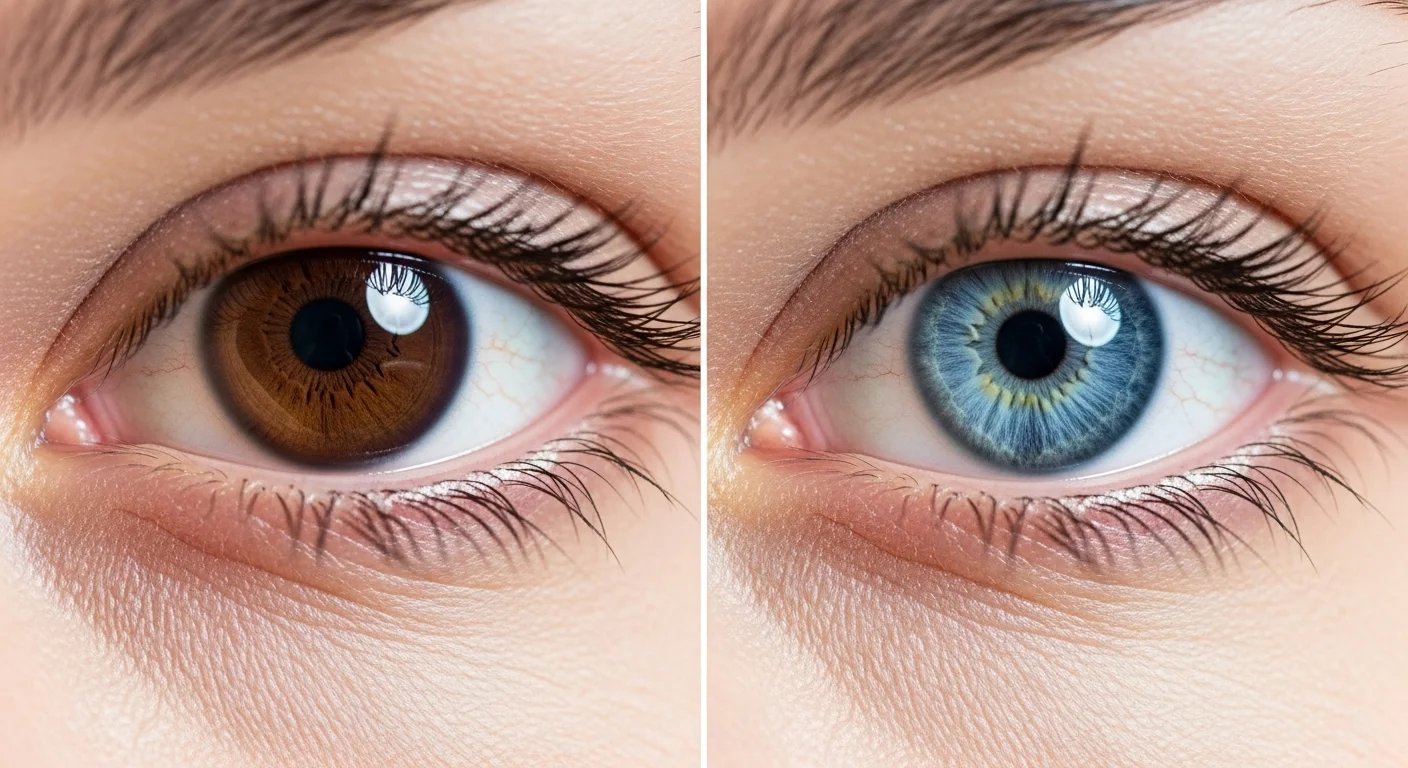
Your natural eye color is determined by the amount and distribution of melanin — a biological pigment — in the iris, the colored ring surrounding your pupil. Brown and dark eyes have a high concentration of melanin in the iris stroma. Blue and green eyes contain very little melanin; their color is produced by a phenomenon called Rayleigh scattering, where light bounces off the iris's collagen fibres in a way that produces blue wavelengths — similar to why the sky appears blue. This explains why there is no such thing as blue pigment in a blue eye, and why eye color change procedures are inherently limited: you can remove melanin (lightening dark eyes), but you cannot add specific color to an eye the way you would paint a surface.
Understanding this basic biology is crucial before exploring any eye color change treatment. Procedures that work by removing melanin — such as laser iris depigmentation — can only produce lighter results (typically grey or blue tones), and the specific outcome is unpredictable. Procedures that add pigment externally — such as keratopigmentation — can achieve a broader range of colors but carry their own risk profile. No procedure can reliably guarantee a specific target color.
Temporary Option: Colored Contact Lenses
For the vast majority of people seeking a change in eye color, colored contact lenses remain the safest, most reversible, and most accessible solution available. Modern cosmetic contact lenses are available in hundreds of color combinations and can create convincing, natural-looking results — from subtle enhancements to dramatic full color changes. They can be worn daily, used occasionally for special events, or removed at any time. Prescription colored lenses are available for those who need vision correction.
- Non-invasive and completely reversible — no risk to eye structure.
- Available in a wide range of colors including blue, green, grey, hazel, and violet.
- Can correct vision simultaneously if prescribed by an optometrist.
- Cost-effective: typically $50–$500 per year depending on brand and type.
- Risks are limited to improper use: always buy from a licensed optometrist, never share lenses, and follow your cleaning and wear schedule strictly.
- Even 'plano' (non-prescription) lenses require a valid prescription in many countries to ensure proper fit.
Cosmetic Iris Implants — Why You Should Avoid Them
Cosmetic iris implants — sold under brand names such as NewColorIris and BrightOcular — involve surgically inserting a thin, flexible, colored silicone disc into the anterior chamber of the eye, in front of the natural iris. Originally developed to treat iris defects caused by trauma or congenital conditions, these devices were later repurposed for cosmetic use and began to be offered in clinics across Latin America, the Middle East, and parts of Europe.
The scientific consensus on cosmetic iris implants in healthy eyes is unambiguous: they are dangerous and should be avoided. These devices are not approved by the FDA, do not hold CE marking for cosmetic use in healthy eyes, and have been associated with a high rate of severe, sight-threatening complications. Published studies document cases of uveitis (chronic inflammation of the eye), hyphema (blood pooling in the anterior chamber), cataract formation, corneal endothelial damage leading to corneal swelling, and — most critically — glaucoma, which can cause permanent and irreversible optic nerve damage and vision loss.
- Not approved by the FDA or for CE marking for cosmetic use in healthy eyes.
- Linked to glaucoma: elevated intraocular pressure damages the optic nerve, potentially causing permanent blindness.
- Corneal endothelial cell loss: these non-regenerating cells do not grow back; significant loss leads to irreversible corneal failure.
- Many patients require explantation (removal) surgery after suffering complications — often requiring multiple additional corrective procedures.
- Even successful implants carry unknown long-term risks, as no study has tracked outcomes beyond 10 years.
- Some clinics offering these implants operate outside established ophthalmological standards.
Laser Iris Depigmentation: What It Is and What the Evidence Says
Laser iris depigmentation — marketed most prominently under the brand name 'NewEyes Laser' and offered by clinics such as Eyecos.eu — uses a Q-switched Nd:YAG laser to selectively break down melanin granules in the superficial layers of the iris. The body's immune system then gradually removes these fragmented pigment particles over a period of weeks to months, revealing a lighter underlying color. Multiple sessions (typically 2–6) are required, spaced apart to allow the eye to clear the released pigment safely between treatments.
The appeal of the procedure is clear: it is the only method that offers a 'natural' color change from the inside out, using the eye's own underlying structures rather than introducing foreign materials. Proponents argue that the procedure is minimally invasive, does not involve implants or incisions, and can be performed on an outpatient basis. Some published case series — including data from Eyecos.eu itself — report high patient satisfaction and improvements in iris color from brown to grey-blue in the short to medium term.
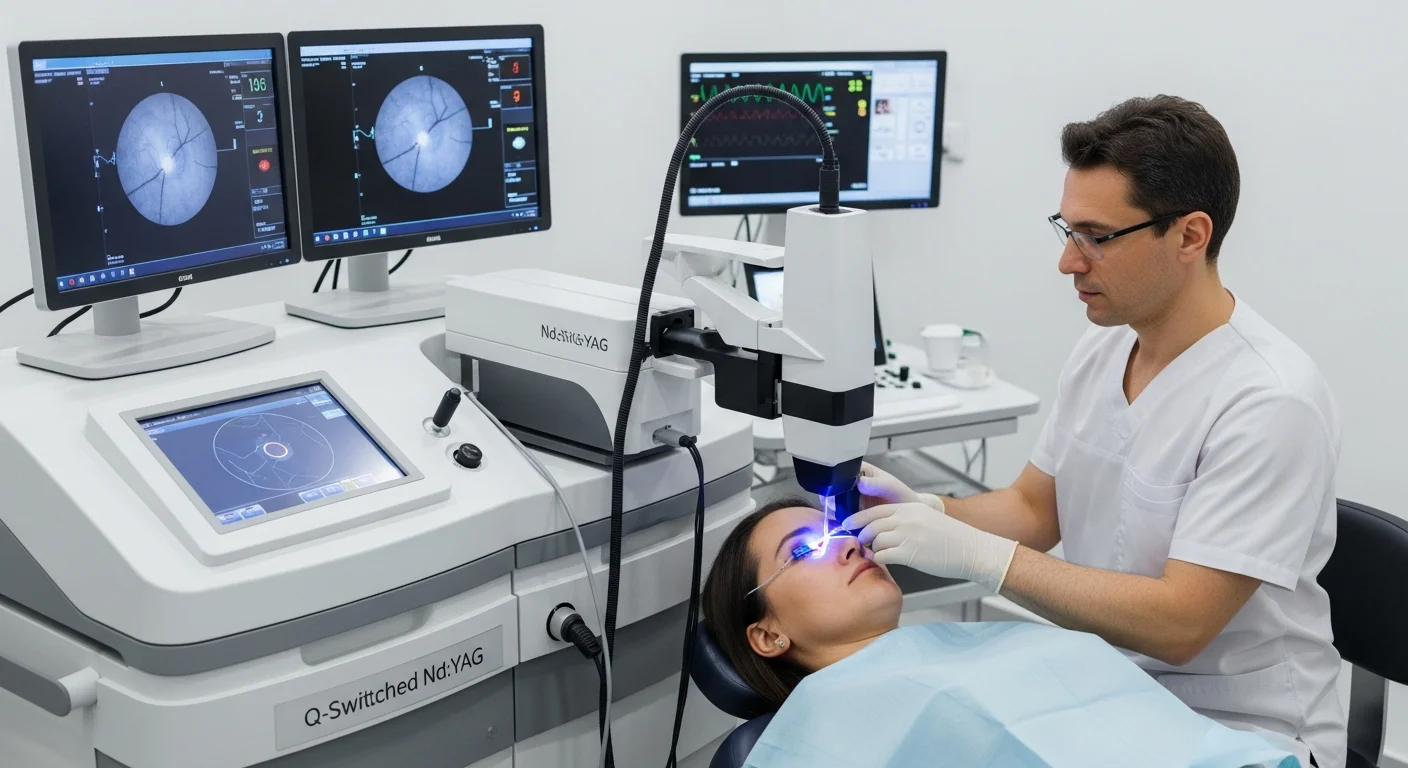
However, the broader scientific literature presents a more cautious picture. The core concern is what happens to the melanin particles as they are released from the iris. These pigment particles must be drained from the eye through the trabecular meshwork — the eye's filtration system. If these particles accumulate in or clog the meshwork, intraocular pressure rises, potentially causing pigmentary glaucoma. Unlike many other complications, glaucoma is not always detectable without specialist monitoring equipment, meaning patients may sustain significant optic nerve damage before symptoms become apparent. Several published case reports have documented patients developing glaucoma following laser iris depigmentation, with some cases resulting in permanent visual loss.
- Can only lighten eyes — cannot change to a darker color or achieve a specific hue reliably.
- Pigmentary glaucoma: released melanin particles can clog the eye's drainage system, raising intraocular pressure and damaging the optic nerve.
- Maculopathy: a rare but severe complication involving laser-induced damage to the macula — the central retinal zone responsible for detailed vision — causing irreversible visual loss.
- Patchy or uneven depigmentation: the results may not be uniform, leading to a mottled or asymmetric appearance.
- Photophobia: increased light sensitivity due to reduced iris pigmentation (the iris normally acts as a natural aperture filter).
- Irreversible: melanin that is destroyed cannot be restored; the original color cannot be recovered if complications arise.
- Long-term data is limited: no study has followed patients beyond 5–10 years to document late-onset complications.
Keratopigmentation: Currently the Safest Surgical Option
Cosmetic keratopigmentation — sometimes called femtosecond laser-assisted keratopigmentation or corneal tattooing — is a technique in which micronized mineral pigments are precisely deposited into the layers of the cornea (the clear front surface of the eye) using a femtosecond laser. The laser creates a precise intrastromal pocket within the corneal layers, into which specially formulated pigments are injected and distributed. Because the pigment sits within the cornea rather than inside the anterior chamber or on the iris, it is generally considered to have a lower risk of disturbing intraocular dynamics such as drainage and pressure.
Among the three surgical options for permanent eye color change, keratopigmentation currently has the most supportive evidence base. Multiple peer-reviewed studies report high rates of patient satisfaction, predictable color outcomes across a wide spectrum (including green, grey, blue, amber, and mixed tones), and a relatively low incidence of severe vision-threatening complications compared to iris implants. The procedure is performed under topical anaesthesia on an outpatient basis, typically taking 20–40 minutes per eye.
- Widest color range of any permanent procedure: allows for customized colors including green, hazel, blue, and grey.
- Lower risk profile than iris implants or laser depigmentation in terms of intraocular pressure disruption.
- High patient satisfaction reported in peer-reviewed medium and long-term studies.
- Light sensitivity (photophobia) may occur in the first few months post-procedure.
- Pigment can fade over time and may require touch-up procedures.
- If the pigmented area encroaches on the pupil, peripheral vision can be affected.
- Corneal ectasia (thinning and bulging of the cornea) is a rare but serious complication, particularly in patients with previous refractive surgery such as LASIK.
- The pigmented corneal layer can make it difficult for future ophthalmologists to monitor underlying corneal or iris health, complicating surveillance of eye disease.
It is important to note that 'safest surgical option' is a relative designation. Keratopigmentation is still an elective, irreversible surgical procedure performed on a healthy, normally functioning eye. Ethical ophthalmologists emphasize that patients must be fully counselled on both short-term and long-term risks, the absence of reversibility, and the possibility that the procedure could complicate future necessary eye care — including cataract surgery, glaucoma treatment, and corneal transplantation. The decision to proceed should never be taken lightly.
Considering eye color change or another eye procedure abroad? Get a free, no-obligation consultation with a verified ophthalmology clinic. Our directory includes accredited clinics across Turkey, Spain, and beyond.
Get a Free Ophthalmology ConsultationCost Comparison by Country
Eye Color Change Treatment Costs 2025
| Procedure | Turkey | Spain / EU | USA | Recommended? |
|---|---|---|---|---|
| Colored Contacts (annual) | $50 – $200 | $100 – $300 | $200 – $500 | ✓ Safest option |
| Laser Iris Depigmentation | $1,500 – $3,000 | $3,000 – $5,500 | Not FDA approved | Caution — limited safety data |
| Keratopigmentation | $3,000 – $6,000 | $5,000 – $9,000 | Very few centres | Most evidence-supported surgical option |
| Cosmetic Iris Implants | $1,500 – $3,500 | $3,000 – $5,000 | Not FDA approved | ✗ Avoid — high risk of blindness |
Costs are approximate and vary by clinic, surgeon experience, and number of sessions. Laser iris depigmentation typically requires 2–6 sessions. Independent ophthalmological consultation is strongly recommended before any procedure.
How to Choose a Safe Clinic for Eye Color Change
The market for cosmetic eye color change procedures is poorly regulated in many countries, and some clinics offering these services operate outside mainstream ophthalmological standards. The following criteria should be applied rigorously when evaluating any provider.
- Board-certified ophthalmologist: The procedure must be performed by a fully qualified ophthalmologist — not a general surgeon, aesthetician, or technician. Verify credentials with the national medical council of the country where the clinic is based.
- Full pre-operative assessment: A reputable clinic will conduct a comprehensive eye examination before any procedure, including intraocular pressure measurement, corneal topography, endothelial cell count, and visual field testing. Any clinic that schedules a procedure without thorough diagnostics should be avoided.
- Specific complication protocols: Ask explicitly what happens if you develop elevated intraocular pressure, uveitis, or other complications after returning home. A responsible clinic will have a clear written protocol for managing international patients who experience post-procedural problems.
- Transparent outcome data: Request complication rates, not just success rates. A clinic that can only provide positive testimonials but cannot supply clinical outcome data is not demonstrating the transparency that medical procedures require.
- Independent consultation: Before proceeding with any of these procedures, seek an independent opinion from an ophthalmologist who has no financial interest in the procedure. This is non-negotiable for any elective irreversible treatment.
- Regulatory standing: Confirm that the clinic operates under the licensing authority of the country's health ministry and has not been subject to regulatory action or warnings.
I spent four months researching before my keratopigmentation procedure. The clinic I chose in Turkey had the surgeon's credentials publicly listed, gave me a full pre-operative report from an independent ophthalmologist, and had a written emergency protocol if I developed complications after returning home. That level of clinical seriousness was what distinguished them from every other clinic I contacted.
Emily R., keratopigmentation patient

Medical tourism for eye color change is concentrated in a small number of countries. Turkey has emerged as a leading destination for keratopigmentation, with specialist ophthalmology clinics such as Dünyagöz Eye Hospital and Veni Vidi Eye Clinics offering internationally recognised expertise in refractive and cosmetic ophthalmology. Spain — particularly through centres associated with the Eyecos network — is a primary destination for laser iris depigmentation. Patients considering these procedures abroad benefit from the same due diligence criteria above, with the added consideration of ensuring adequate follow-up capacity in their home country after returning from treatment.
Browse our verified directory of ophthalmology clinics worldwide. Every listed clinic is independently reviewed for accreditation, surgeon credentials, and patient outcomes.
Find Verified Eye ClinicsFrequently Asked Questions
Can laser really change your eye color permanently?
Yes — laser iris depigmentation can permanently lighten brown eyes to grey or blue-grey tones by destroying melanin in the iris. The process is irreversible: the original color cannot be restored. Results vary significantly between individuals and cannot be precisely predicted in advance. The procedure carries real risks including glaucoma and maculopathy, and lacks extensive long-term safety data for cosmetic use.
Is eye color change surgery legal?
Legality varies by country. Cosmetic iris implants are not FDA-approved or CE-marked for use in healthy eyes and are effectively illegal for cosmetic purposes in the US and most of the EU. Laser iris depigmentation and keratopigmentation occupy a regulatory grey area in many countries — they may be legally offered but are not approved by major regulatory bodies for cosmetic indications. Always check the regulatory status of any procedure in the specific country where you plan to have it.
How much does laser eye color change cost in Turkey?
Laser iris depigmentation in Turkey costs approximately $1,500 to $3,000 for a full treatment course (typically 2–6 sessions). Keratopigmentation costs $3,000 to $6,000 per eye. These prices are significantly lower than equivalent procedures in Western Europe or the US, where very few clinics offer them. However, cost should not be the primary driver for choosing a provider for these procedures — the surgeon's experience and the clinic's monitoring protocols are more important.
How long does eye color change last?
Laser iris depigmentation results are permanent in terms of melanin removal — once destroyed, melanin does not regenerate. However, the visual color outcome may change slightly as the eye ages. Keratopigmentation results are long-lasting but the pigment can fade over years, potentially requiring touch-up procedures. Both procedures are considered irreversible: there is no method to restore the original eye color once either procedure has been performed.
What is the safest way to change eye color?
Colored contact lenses remain the safest option for changing eye color — they are non-invasive, reversible, and carry no risk of permanent eye damage when used correctly with a proper prescription. Among permanent surgical procedures, keratopigmentation currently has the most peer-reviewed evidence supporting its safety and efficacy compared to iris implants (which should be avoided) and laser iris depigmentation (which carries significant IOP and maculopathy risks). No permanent procedure should be considered without a thorough consultation with at least two qualified ophthalmologists.
Can I have cataract surgery or LASIK after eye color change procedures?
This is a critical consideration that many patients underestimate. Both laser iris depigmentation and keratopigmentation can complicate future necessary eye procedures. Corneal pigmentation makes it harder for surgeons to visualize underlying structures and can interfere with the laser mapping used for LASIK and cataract surgery calculations. Iris pigmentation changes affect how light enters the eye and complicate intraocular lens power calculations. Discuss this explicitly with any surgeon before proceeding, and consider how these procedures might affect your future eye care options.