Dental Imaging Technologies: A Revolution in Precision
Dental diagnostics have undergone a remarkable transformation in recent years, driven by digital technology that provides unprecedented accuracy, speed, and patient comfort. The days of uncomfortable film-based X-rays and imprecise dental impressions are rapidly giving way to digital imaging systems that produce instant, high-resolution images and 3D models of teeth, jawbone, sinuses, and surrounding structures. These technological advances have not only improved diagnostic accuracy but have fundamentally changed treatment planning, making procedures like dental implants, orthodontics, and cosmetic dentistry more precise and predictable.
The key dental diagnostic technologies now available at leading international dental clinics include digital panoramic radiography (OPG), cone-beam computed tomography (CBCT), intraoral digital scanning, digital photography with shade matching, and cephalometric analysis for orthodontic planning. Many dental tourism destinations — particularly Turkey, Hungary, Thailand, and India — have invested heavily in the latest dental technology, often operating newer equipment than the average dental practice in Western countries. This technology investment, combined with significantly lower operating costs, creates the ideal conditions for high-quality, affordable dental diagnostics abroad.
Understanding what each diagnostic tool reveals helps you appreciate the thoroughness of a comprehensive dental evaluation and make informed decisions about your treatment. A complete dental diagnostic workup abroad typically takes 30-60 minutes and provides all the information needed for precise treatment planning — whether you need a single implant, full-mouth rehabilitation, orthodontic treatment, or cosmetic smile makeover. Most clinics include diagnostic imaging in their treatment packages, meaning the diagnostics are effectively free when you proceed with treatment.
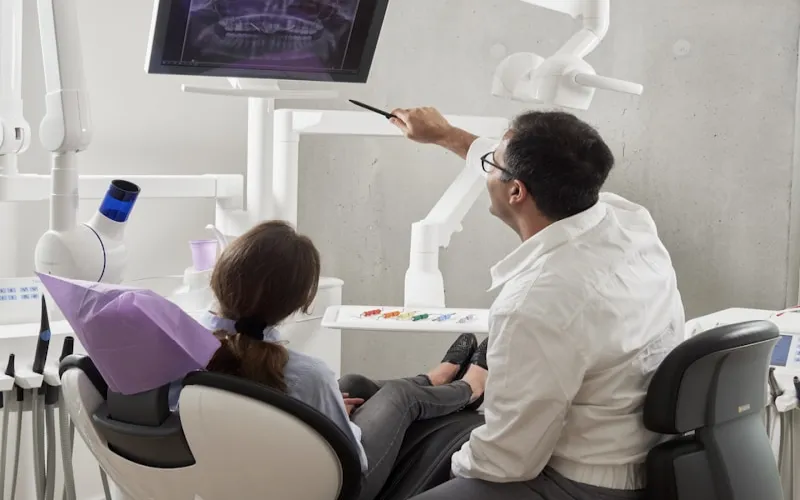
Panoramic X-Ray (OPG): The Essential First Step
The panoramic radiograph (orthopantomogram or OPG) is the foundational dental diagnostic image, providing a single wide view of the entire mouth including all teeth, upper and lower jawbones, temporomandibular joints (TMJ), maxillary sinuses, and nasal area. The digital panoramic X-ray has replaced film-based versions at most modern clinics, offering numerous advantages: instant image availability, lower radiation dose, ability to adjust contrast and brightness for enhanced visualization, easy digital sharing and storage, and the ability to create diagnostic annotations and measurements directly on the image.
A panoramic X-ray reveals a wealth of diagnostic information: dental caries (cavities) especially between teeth and below existing restorations, bone levels around teeth (detecting periodontal disease), impacted teeth (especially wisdom teeth), cysts and tumors in the jaws, TMJ abnormalities, sinus conditions (sinusitis, mucosal thickening, sinus proximity to tooth roots), jaw fractures, and developmental abnormalities. The panoramic view allows the dentist to assess the overall dental and skeletal situation before focusing on specific areas of concern. At international clinics, digital panoramic X-rays cost $10-$60 compared to $100-$300 in the US.
CBCT 3D Scanning: Three-Dimensional Precision
Cone-Beam Computed Tomography (CBCT) represents the most significant advancement in dental imaging, providing three-dimensional images of teeth, bone, nerve pathways, and surrounding soft tissues. Unlike a standard 2D X-ray which superimposes structures, CBCT produces a 3D volume that can be viewed in any plane (axial, coronal, sagittal) and reconstructed into detailed 3D models. This three-dimensional visualization is essential for accurate dental implant planning, assessment of impacted teeth and their relationship to nerves and sinuses, evaluation of jaw pathology, endodontic (root canal) assessment, orthodontic treatment planning, and TMJ evaluation.
For dental implant planning, CBCT is indispensable. It provides precise measurements of available bone height, width, and density at planned implant sites, reveals the exact location of critical anatomical structures (inferior alveolar nerve, maxillary sinus floor, adjacent tooth roots), and enables virtual implant placement using specialized software. This pre-surgical planning dramatically improves implant success rates and reduces complications. Modern guided surgery protocols use CBCT data to create surgical guides that direct implant placement with sub-millimeter accuracy. CBCT scanning costs $30-$180 at international clinics compared to $250-$600 in the US.
Intraoral Digital Scanning: Goodbye Impression Trays
Intraoral scanners have revolutionized dental impression-taking by replacing the uncomfortable traditional impression trays (filled with putty or alginate material that can trigger gag reflexes) with a small wand that captures thousands of images per second and creates a precise 3D digital model of the teeth. Leading scanner systems include iTero (by Align Technology), CEREC Primescan (by Dentsply Sirona), and Trios (by 3Shape). These scanners produce digital impressions that are equal to or more accurate than traditional impressions, and the data can be used for same-day crown fabrication (CAD/CAM), clear aligner production, and digital smile design.
Digital Smile Design (DSD) takes intraoral scanning a step further by combining dental scans with facial photographs and videos to design a new smile that harmonizes with the patient's facial proportions, lip line, gum line, and personal preferences. Using specialized software, the dentist creates a digital mockup of the proposed final result that the patient can preview before any treatment begins. This technology is particularly valuable for cosmetic dentistry (veneers, crowns, smile makeovers) and ensures patient satisfaction by providing a realistic preview. Many leading dental tourism clinics in Turkey offer DSD as a complimentary service.
Cost Comparison by Country
Dental Diagnostics Cost Comparison 2025
| Country | Panoramic X-Ray | CBCT 3D Scan | Full Digital Workup |
|---|---|---|---|
| USA | $100 - $300 | $250 - $600 | $500 - $1,500 |
| UK | $60 - $200 | $150 - $400 | $300 - $1,000 |
| Turkey | $20 - $50 | $50 - $150 | $80 - $300 |
| India | $10 - $30 | $30 - $100 | $50 - $200 |
| Thailand | $25 - $60 | $60 - $180 | $100 - $350 |
| Hungary | $20 - $50 | $50 - $150 | $80 - $300 |
| Mexico | $15 - $40 | $40 - $120 | $70 - $250 |
Full digital workup includes panoramic X-ray, CBCT scan, intraoral scan, digital photography, and dentist consultation with treatment plan. Many clinics include diagnostic imaging as part of the treatment package at no additional cost.
Dental diagnostics abroad are remarkably affordable, and many clinics include comprehensive diagnostic imaging as part of the treatment consultation at no additional charge. A full diagnostic workup (panoramic X-ray, CBCT, intraoral scan, clinical exam, treatment plan) costs $50-$300 at leading international clinics compared to $500-$1,500 in the US. When pursuing dental treatment abroad, the diagnostic phase is essentially free if you proceed with treatment — clinics absorb the imaging costs into the treatment fee. This approach ensures comprehensive pre-treatment planning without financial barriers.
Combining Diagnostics with Treatment Abroad
One of the key advantages of dental diagnostics abroad is the ability to seamlessly transition from diagnosis to treatment in a single trip. The traditional Western model — separate diagnostic visit, wait for results, treatment planning consultation, wait for insurance approval, schedule treatment, wait for lab work — can stretch a simple dental procedure over weeks or months. International dental clinics streamline this process: diagnostic imaging is performed on the first visit, the dentist reviews results and discusses treatment options immediately, and in many cases, treatment can begin the same day or the next day.
For complex treatments like full-mouth rehabilitation with dental implants, a diagnostic trip followed by a treatment trip is often recommended. During the diagnostic visit (1-2 days), the dentist performs comprehensive imaging, clinical assessment, and creates a detailed treatment plan with options and pricing. The patient returns home to consider their options, and if they proceed, a treatment trip is scheduled (typically 5-14 days depending on the complexity). Some clinics offer remote treatment planning — you can send previous dental records and receive a preliminary assessment before traveling, reducing the diagnostic visit to a confirmation appointment.
Best Clinics for Dental Diagnostics Abroad
Memorial Sisli Hospital in Istanbul has a comprehensive dental department equipped with the latest diagnostic technology including CBCT (Planmeca ProMax 3D), intraoral scanners (iTero Element), digital panoramic and cephalometric systems, and CAD/CAM capability for same-day restorations. Their dental team includes specialists in implantology, orthodontics, prosthodontics, and cosmetic dentistry who use digital workflows for precise treatment planning. The hospital setting offers additional advantages for patients needing dental work under sedation or general anesthesia.
Acıbadem Maslak Hospital dental department combines hospital-grade imaging (including medical CT when needed for complex maxillofacial cases) with dental-specific technology. Their multidisciplinary approach means that complex cases involving both dental and medical considerations (jaw surgery, implants in compromised bone, dental rehabilitation in medically complex patients) benefit from the full hospital infrastructure. The dental team uses guided surgery protocols for implant placement, ensuring optimal positioning and minimal surgical trauma.
Planning dental treatment abroad? Start with a comprehensive dental diagnostic evaluation at top international clinics.
Get Free Dental Diagnostics Quote
The shift from 2D to 3D dental imaging has transformed treatment planning from estimation to precision. CBCT and digital scanning have made dental treatment more predictable, safer, and more comfortable for patients — while digital workflows have reduced turnaround times from weeks to hours.
International Journal of Dental Imaging, Digital Dentistry Standards
Frequently Asked Questions
Is dental CBCT safe?
Yes, dental CBCT uses significantly less radiation than medical CT scans. A typical dental CBCT scan delivers 20-200 microsieverts (μSv) — equivalent to a few days of natural background radiation. This is much less than a medical CT (1,000-2,000 μSv). The diagnostic benefit far outweighs the minimal radiation risk.
Do I need a CBCT scan for dental implants?
CBCT is strongly recommended for dental implant planning and is considered standard of care in modern implant dentistry. It provides essential 3D information about bone dimensions, density, and anatomical structures that 2D X-rays cannot. Some simple single-implant cases may be planned with panoramic X-ray alone, but CBCT significantly improves accuracy and safety.
Can I get dental diagnostics without committing to treatment?
Absolutely. Many patients travel abroad specifically for a diagnostic evaluation and treatment plan, then return home to decide. The diagnostic visit typically costs $50-$300 (or may be free if you proceed with treatment). You'll receive all imaging files, a detailed treatment plan, and cost estimates to review at your leisure.
How long does a full dental diagnostic evaluation take?
A comprehensive dental diagnostic evaluation — including panoramic X-ray, CBCT scan (if indicated), intraoral scan, clinical examination, and dentist consultation with treatment planning — typically takes 60-90 minutes. Results and treatment plans are discussed immediately. Digital files can be provided on USB or emailed to you.
Will my dentist at home accept dental imaging from abroad?
Yes, digital dental imaging files (DICOM format for CBCT, standard image formats for panoramic and intraoral scans) are universally compatible and accepted by dental professionals worldwide. Most clinics provide imaging files on USB drives or via secure download links. Your home dentist can view these on standard dental imaging software.
Is the panoramic X-ray enough or do I need CBCT?
A panoramic X-ray is sufficient for general dental assessment, screening for cavities and periodontal disease, and basic treatment planning. CBCT is recommended when 3D information is needed: implant planning, impacted wisdom teeth near nerves, jaw pathology evaluation, complex root canal assessment, and orthodontic/surgical planning. Your dentist will recommend the appropriate imaging.