Understanding Gynecomastia
Gynecomastia is the benign enlargement of glandular breast tissue in males, affecting an estimated 40–65% of men at some point during their lifetime. The condition can occur at any age — from newborns and adolescents experiencing hormonal shifts to middle-aged and older men whose testosterone levels naturally decline. Despite being common, gynecomastia carries a significant psychological burden: studies consistently show that men with the condition experience reduced self-esteem, social anxiety, avoidance of swimming and gym environments, and difficulties with intimacy. For many men, the emotional impact is as significant as any physical discomfort.
True gynecomastia involves actual glandular breast tissue and is biochemically driven by an imbalance between estrogen and testosterone. It must be distinguished from pseudogynecomastia — fatty enlargement of the chest without true glandular tissue — which is caused purely by excess body fat. The distinction matters because true gynecomastia requires glandular excision (surgical removal of fibrous breast tissue), while pseudogynecomastia can often be resolved with liposuction alone. Many men have a combination of both, requiring a combined excision-plus-liposuction approach for optimal results. An experienced surgeon performs clinical examination and sometimes ultrasound imaging before surgery to determine the appropriate technique.
Several underlying causes of gynecomastia are reversible without surgery: anabolic steroid use, certain medications (spironolactone, cimetidine, anti-androgens, some antidepressants), marijuana use, liver disease, and hypogonadism. Before considering surgery, it is important to identify and address any underlying cause, as resolution of the cause sometimes leads to partial or complete remission of the tissue enlargement. However, in many cases — particularly where gynecomastia has persisted for more than 12–24 months — the glandular tissue becomes fibrotic and will not regress regardless of hormonal normalization. For these patients, surgery is the only effective and permanent treatment.
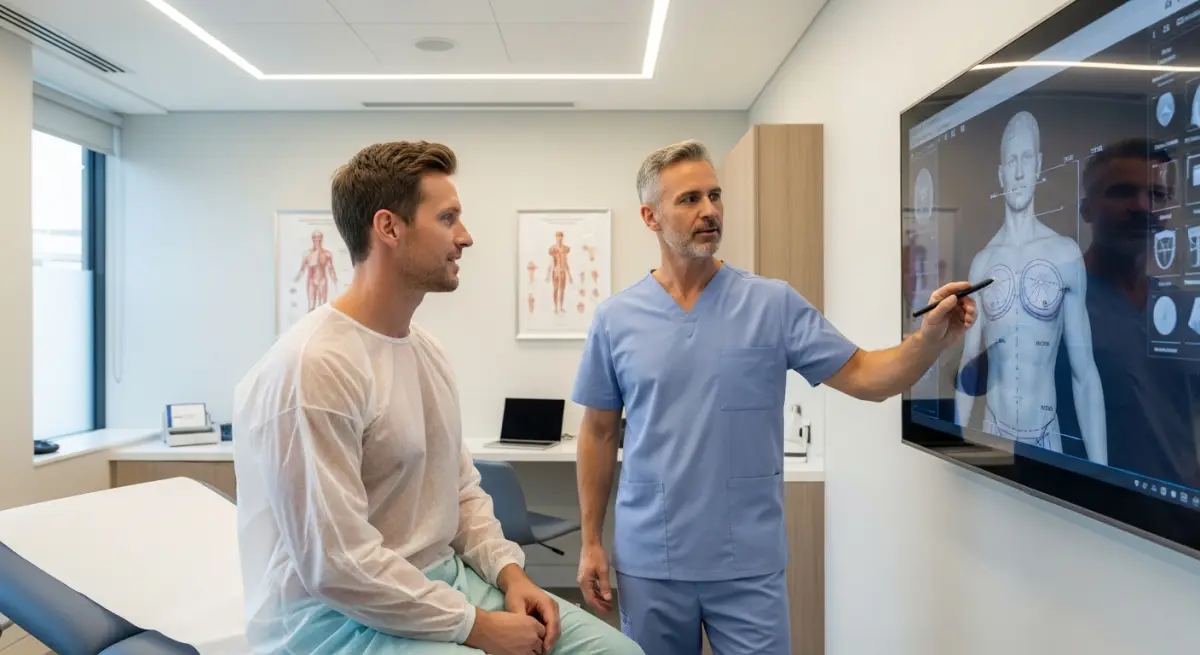
Grade matters significantly in gynecomastia treatment planning. Grade I (minor enlargement without excess skin) typically requires only glandular excision through a small periareolar incision. Grade II (moderate enlargement with minor skin excess) may require liposuction plus excision. Grade III (marked enlargement with significant skin redundancy) — less common but challenging — may require more extensive skin excision patterns similar to those used in breast reduction surgery. At clinics like Vanity Cosmetic Surgery Hospital in Istanbul, surgeons perform preoperative digital imaging to show patients realistic simulation of expected outcomes, helping manage expectations and tailor the surgical plan to individual anatomy and goals.
Surgical Options & Techniques
The standard approach to gynecomastia surgery combines liposuction with direct glandular excision. Vaser liposuction — high-definition ultrasound-assisted liposuction — has become the preferred liposuction method for gynecomastia at leading international clinics because it selectively targets fibrous tissue, delivers superior chest contouring, and causes less trauma to surrounding structures than traditional liposuction. After Vaser, the surgeon makes a semicircular incision along the lower half of the areola (the periareolar approach), removing the fibrous glandular disc directly. When properly executed, this incision heals almost invisibly within the natural pigment boundary of the areola.
Endoscopic-assisted techniques allow surgeons to visualize and remove deep glandular tissue through very small incisions, reducing scarring further. Some cases benefit from pull-through (or Webster) technique, where specialized forceps extract breast tissue through the periareolar incision without enlarging it. Robotic-assisted gynecomastia surgery remains largely experimental but is offered at select high-technology centers in South Korea and Japan. For athletes and bodybuilders — a demographic particularly affected by anabolic steroid-related gynecomastia — high-definition liposuction combined with precise excision achieves the athletic chest contour patients seek, with results that are visible immediately after removal of the surgical dressing.
Cost Comparison by Country
Gynecomastia Surgery Cost Comparison 2025
| Country | Liposuction Only | Excision + Lipo | Savings vs USA |
|---|---|---|---|
| USA | $3,500 – $5,500 | $5,000 – $8,000 | — |
| Turkey | $1,200 – $2,000 | $1,800 – $2,800 | Up to 70% |
| Thailand | $1,500 – $2,500 | $2,000 – $3,200 | Up to 65% |
| South Korea | $2,000 – $3,000 | $2,500 – $4,000 | Up to 55% |
| India | $800 – $1,500 | $1,200 – $2,200 | Up to 75% |
| Mexico | $1,500 – $2,500 | $2,000 – $3,200 | Up to 60% |
| Spain | $2,000 – $3,500 | $2,800 – $4,500 | Up to 50% |
Prices include surgeon fees, anesthesia, facility costs, garment, and standard post-op care. General anesthesia may add $500–$800 if applicable. Both sides are treated simultaneously.
Turkey is the world's leading destination for gynecomastia surgery medical tourism, combining experienced plastic surgeons with dramatic cost savings and well-established international patient infrastructure. Istanbul alone hosts dozens of internationally accredited cosmetic surgery centers that perform gynecomastia correction as one of their most requested procedures. Clinics like Memorial Şişli Hospital employ board-certified plastic surgeons trained at European institutions who perform gynecomastia surgery using the latest Vaser ultrasound technology. The typical cost for a combined excision-plus-Vaser procedure in Istanbul — including accommodation coordination and VIP airport transfer — comes to $2,000–$2,800, compared to $6,000–$9,000 at a comparable US private practice.
Thailand, particularly Bangkok, is another popular destination, especially for patients from Australia and Southeast Asia. Hospitals like Bumrungrad International and Yanhee Hospital have dedicated cosmetic surgery centers staffed by surgeons certified by the Thai Board of Plastic Surgery. Bangkok's combination of excellent clinical standards, internationally accredited hospitals, and appealing recovery environment makes it ideal for combining surgery with a recuperative holiday. South Korea is the preferred destination for patients seeking the most technically advanced approaches, with Seoul clinics offering high-definition liposuction techniques that achieve athletic chest contouring not commonly available in Western practices.
Ready to explore your options for gynecomastia surgery abroad? Get personalized clinic recommendations and cost estimates tailored to your specific grade and goals.
Get a Free QuoteBest Destinations for Surgery
Istanbul is the undisputed leader for gynecomastia surgery tourism in Europe and the Middle East. The concentration of experienced plastic surgeons, world-class accredited facilities, and the government's active promotion of health tourism has created an ecosystem where international patients receive outstanding care at dramatically lower cost than their home countries. Turkish plastic surgeons frequently present at international conferences and publish in peer-reviewed plastic surgery journals, reflecting engagement with global best practices. The Turkish Board of Plastic, Reconstructive and Aesthetic Surgery (TPRCD) maintains rigorous standards for board certification, and the Turkish Ministry of Health oversees quality standards at all facilities treating international patients.
India's major metropolitan centers — Mumbai, Delhi, Pune, and Bangalore — offer the most affordable gynecomastia surgery globally, with excellent outcomes at JCI-accredited multi-specialty hospitals. Many Indian plastic surgeons trained at institutions in the UK, US, and Australia before returning to practice in India, bringing international training standards to cost-competitive facilities. Apollo Hospital Chennai and Medanta in Delhi both have dedicated plastic surgery departments with high volumes of gynecomastia procedures performed annually, contributing to the surgical expertise that drives excellent outcomes. For patients from the Gulf region, Indian hospitals offer short flight times, familiar cultural context for South Asian patients, and costs 70–75% below US pricing.
South Korea's position as a global leader in aesthetic surgery extends naturally to gynecomastia treatment. Seoul clinics are renowned for their technical precision, use of cutting-edge equipment, and exceptionally detailed preoperative planning. Banobagi Plastic Surgery in Seoul exemplifies the Korean approach: extensive digital analysis of chest morphology, surgeon-specific technique selection, and meticulous postoperative management including specialized massage therapy and compression garment protocols. For patients seeking the most refined aesthetic result — particularly those with athletic physiques where even minor irregularities would be noticeable — South Korea represents the premium destination.
Choosing the Right Surgeon
Board certification in plastic surgery is the minimum requirement for a gynecomastia surgeon, but additional factors separate excellent surgeons from average ones. Look for surgeons who specialize in body contouring rather than general cosmetic surgeons who perform many different procedures. The volume of gynecomastia procedures a surgeon performs annually correlates directly with outcome quality: surgeons performing 100+ cases per year develop the technique refinement and complication-management experience that lower-volume surgeons cannot match. Request the surgeon's specific gynecomastia before-and-after gallery — not the clinic's general gallery — and look for cases with anatomy similar to yours.
During virtual consultation, evaluate the surgeon's ability to assess your specific grade of gynecomastia, explain the appropriate technique, set realistic expectations, and discuss potential complications honestly. A surgeon who promises perfect results without discussing revision rates or technique limitations is raising red flags. Inquire about the surgeon's approach to asymmetry — the two sides of the chest often have different amounts of tissue, and skilled surgeons address this asymmetry during surgery to produce a balanced result. Ask specifically about the surgeon's revision policy: reputable surgeons at top international clinics will perform minor revisions at no charge within a defined period if the result does not meet the agreed-upon surgical plan.
What to Expect: Surgery & Recovery
Gynecomastia surgery typically takes 1.5–3 hours depending on the extent of tissue involvement and the liposuction component. Most procedures are performed under general anesthesia at licensed day surgery facilities, allowing same-day discharge. Some surgeons prefer deep sedation with local anesthesia (tumescent technique) for liposuction-only cases, which reduces the anesthesia recovery time. After surgery, patients wear a compression vest continuously for 4–6 weeks — this vest is critical for minimizing swelling, controlling fluid accumulation, and helping the skin retract smoothly against the newly contoured chest wall.
The initial recovery phase involves 48–72 hours of rest with minimal arm movement to avoid disrupting the periareolar sutures. Most patients experience moderate soreness, swelling, and bruising for the first week. Light activity resumes at 3–5 days; desk work at 5–7 days; driving at 10–14 days; upper body exercise at 6 weeks; full gym activity including chest exercises at 8–10 weeks. Final results — including resolution of all swelling and complete scar maturation — are typically visible at 3–6 months. The periareolar scar, when properly executed and treated with silicone gel or sheets postoperatively, becomes almost invisible at 9–12 months.
For patients traveling internationally for surgery, the recommended minimum stay is 6–7 days: Day 1 (arrival and pre-operative tests), Day 2 (surgery and overnight observation if required), Days 3–4 (rest at hotel), Day 5 (wound check and drain removal if applicable), Day 6 (review of dressing, compression vest fitting), Day 7 (clearance for flight). Most surgeons clear patients for short-haul flights at 5–7 days and long-haul flights at 7–10 days. The post-operative team provides written wound care instructions, emergency contact numbers, and a detailed report for the patient's local physician.

Risks & Safety Considerations
Gynecomastia surgery is considered low-risk when performed by qualified surgeons in accredited facilities. The most common complication is hematoma (blood pooling beneath the skin), occurring in 1–4% of cases and typically resolving with drainage. Seroma (fluid accumulation) is less common with gynecomastia than with other body contouring procedures. Infection rates are below 1% in properly sterilized surgical environments. Nipple sensitivity changes — either hypersensitivity or numbness — occur temporarily in 10–20% of patients and resolve within 3–6 months; permanent changes are rare (under 3%). Asymmetry is the most common aesthetic concern requiring secondary revision, occurring when the two sides have significantly different tissue volumes.
Compare accredited gynecomastia surgeons across Turkey, Thailand, and South Korea. Get free personalized quotes with surgeon profiles and gallery reviews.
Compare Surgeons & ClinicsFrequently Asked Questions
Will gynecomastia surgery results be permanent?
Yes, in the vast majority of cases. Once glandular tissue is surgically removed, it does not regenerate. However, if you resume anabolic steroid use or take medications that caused the original gynecomastia, recurrence in remaining breast tissue is possible. Significant weight gain can cause fatty pseudogynecomastia to recur. Maintaining a stable body weight and avoiding hormonal triggers preserves the surgical result indefinitely.
Can I see results immediately after surgery?
You will see a significant change immediately, but the final result takes 3–6 months as swelling resolves. In the first 2–4 weeks, there will be significant swelling that can make the chest appear larger than the final result. The compression vest you wear continuously for 6 weeks helps control this. By 6–8 weeks, approximately 70% of the final result is visible; by 3–6 months, the full outcome is apparent.
Will there be visible scars?
The periareolar incision (around the lower edge of the areola) is the standard approach and heals remarkably well because it falls within the natural color boundary of the areola. With proper postoperative care using silicone gel/sheets, most patients have minimal visible scarring by 12 months. Liposuction incisions (2–3mm) are essentially invisible once healed. For Grade III cases requiring skin excision, scars are more visible but remain within planned patterns that are largely concealable.
How do I know if I need surgery or if my gynecomastia will resolve on its own?
Gynecomastia in adolescents (pubertal gynecomastia) resolves spontaneously within 1–3 years in 75–90% of cases — surgery is generally not recommended until growth is complete and the condition has persisted for at least 2 years. In adults, gynecomastia that has been present for more than 12–24 months is unlikely to resolve without surgery due to fibrosis of the glandular tissue. A board-certified plastic surgeon with endocrinology input can assess your specific situation.
How do I combine gynecomastia surgery with travel recovery?
Istanbul is ideal because it combines world-class surgical expertise with a rich cultural destination for recovery. After 3–5 days of initial rest, patients can comfortably explore the city with gentle walking — the Grand Bazaar, Hagia Sophia, and Bosphorus cruises are all low-exertion activities compatible with early recovery. Bangkok and Bangkok also offer excellent options, with luxury resort recovery packages that include spa treatments compatible with post-surgical healing.