Understanding Facial Implants
Facial skeletal augmentation using solid silicone, porous polyethylene (Medpor), or ePTFE implants is the gold standard for permanently enhancing the bony architecture of the face — creating structural changes that fillers cannot replicate and that fat transfer cannot achieve with the same precision and longevity. While non-surgical approaches like dermal fillers provide temporary volume, they do not alter the fundamental proportions of facial structure. Facial implants deliver permanent, structurally precise augmentation of the chin (mentum), cheekbones (malar eminences), jaw angle (mandibular angle), and other areas — producing the strong, defined facial geometry associated with aesthetic attractiveness.
The demand for facial implants has grown substantially alongside social media's emphasis on defined facial structure — particularly the trend for a chiseled jawline, prominent cheekbones, and a strong chin projection. Cultural aesthetics influence implant preferences: Western patients typically seek moderate chin projection and natural-looking cheekbone enhancement; East Asian patients often request jaw angle implants to create a more defined V-line or triangular facial shape; patients from the Middle East frequently request a combination of cheek and chin implants to achieve a harmonious, balanced aesthetic. Understanding these cultural nuances is a strength of cosmetic surgery centers that specialize in international patients, such as those in Istanbul and Seoul.
Modern facial implant materials are highly biocompatible and stable. Solid silicone implants are the most commonly used — they feel natural, are soft enough to allow precise shaping intraoperatively, and can be repositioned or removed if needed. Porous polyethylene (Medpor) implants integrate with surrounding tissue through fibrous ingrowth, making them more resistant to displacement but somewhat more complex to remove if revision is ever needed. ePTFE (Gore-Tex) provides a soft, flexible option for areas where pliability is advantageous. At centers like Banobagi Plastic Surgery in Seoul — internationally renowned for V-line jaw surgery and facial contouring — surgeons use custom-fabricated implants designed from 3D CT scans of the patient's own bone architecture for maximal anatomical precision.
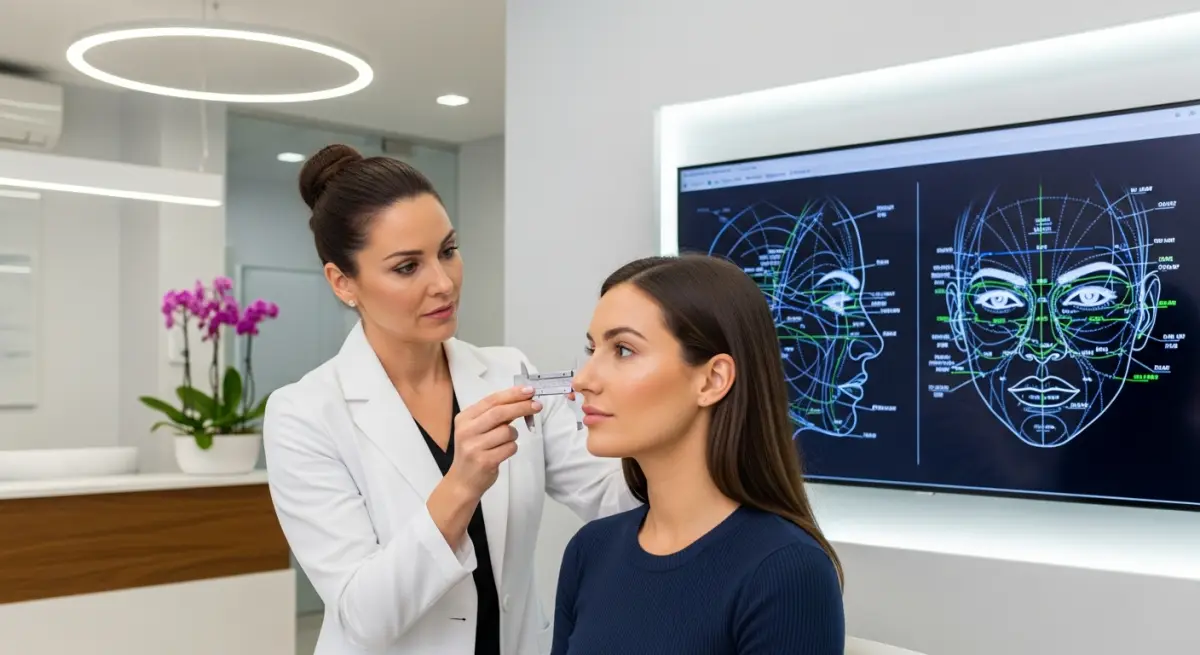
Chin Implants: Techniques & Results
Chin augmentation (mentoplasty) addresses microgenia — underprojection of the chin relative to the face — which causes the face to appear unbalanced, with the nose appearing disproportionately prominent and the neck-chin angle poorly defined. The procedure is one of the most impactful and consistent cosmetic surgeries for improving overall facial harmony. The incision can be placed either inside the mouth (intraoral, leaving no external scar) or in the natural crease below the chin (submental, a very small incision that heals invisibly). The implant is placed in a precise pocket directly on the chin bone, usually secured with a titanium screw or sutures to prevent movement.
Projection, height, and width components of chin shape can be independently controlled by implant selection. Modern anatomical chin implants address three-dimensional contouring rather than simple forward projection, allowing surgeons to elongate a short chin, widen a narrow chin, or address chin asymmetry. Combining chin implant with rhinoplasty (nose surgery) is one of the most complementary procedure combinations in facial surgery: improving chin projection simultaneously with nasal refinement changes the profile dramatically, as the visual relationship between the nose and chin fundamentally defines the aesthetic balance of the profile view.
Cheek Implants: Malar & Submalar
Cheek implants address flat or deficient cheekbones that give the midface an underdeveloped or hollow appearance. Malar implants enhance the zygomatic eminence (the prominent 'apple' of the cheekbone visible from the front and side). Submalar implants add volume to the lower cheek area, addressing the flat, gaunt appearance of midface deflation without elevating the highest point of the cheekbone. Combined malar-submalar implants address both zones simultaneously. The approach is typically via an incision inside the upper lip or lower eyelid — both of which are hidden and heal without external scarring. The implant is placed directly on the zygomatic bone in a precise subperiosteal pocket that holds it securely in position.
Cost Comparison by Country
Cheek & Chin Implant Cost Comparison 2025
| Procedure | Turkey | South Korea | Spain | USA |
|---|---|---|---|---|
| Chin Implant | $1,800 – $3,000 | $2,500 – $4,500 | $2,500 – $4,000 | $4,500 – $7,000 |
| Cheek Implants (pair) | $2,500 – $4,000 | $3,500 – $6,000 | $3,500 – $5,500 | $6,000 – $9,000 |
| Chin + Cheek Combined | $3,500 – $5,500 | $5,000 – $8,500 | $5,000 – $8,000 | $9,000 – $14,000 |
| Jaw Angle Implants | $3,000 – $5,000 | $4,000 – $7,000 | $4,000 – $6,500 | $7,000 – $11,000 |
| Full Facial Implant Set | $5,500 – $8,500 | $7,500 – $12,000 | $7,000 – $11,000 | $14,000 – $22,000 |
Prices include implant cost (silicone, Medpor, or ePTFE), surgeon fees, anesthesia, and facility costs. Implant costs vary by brand and material. Prices are for both sides where applicable.
South Korea commands a premium for facial implant surgery due to its globally recognized expertise in facial skeletal contouring. Seoul's Gangnam district hosts dozens of plastic surgery clinics that specialize in comprehensive facial structure modification — combining orthognathic surgical techniques (bone cutting and repositioning) with implant augmentation to produce precisely calibrated facial proportions. For patients seeking primarily implant-based augmentation without bone surgery, Korea remains 40–55% more affordable than the US while delivering arguably the most sophisticated results globally.
Turkey offers exceptional value for facial implant surgery, with experienced plastic surgeons in Istanbul performing high volumes of chin and cheek augmentation for international patients. Many Turkish plastic surgeons trained at European institutions in Germany, France, and the UK, bringing European aesthetic sensibilities to cost-competitive facilities. Memorial Şişli Hospital and specialized aesthetic surgery centers in Istanbul provide comprehensive facial surgery services including preoperative digital planning and 3D implant selection at 50–60% below US costs.
Define your facial structure with precision-designed facial implants. Get personalized consultation and quotes from leading facial surgeons abroad.
Explore Facial Implant OptionsRecovery & Aftercare
Chin implant recovery is remarkably comfortable compared to many cosmetic procedures. Swelling and bruising are typically moderate, peaking at 48–72 hours and substantially subsiding by 10–14 days. Most patients are presentable (able to socialize with some residual swelling) at 2 weeks. Implants placed via intraoral incisions require careful oral hygiene and a soft diet for 2 weeks; those placed via submental incision require wound care but allow normal eating immediately. Full facial swelling takes 3–6 months to fully resolve, with final implant appearance and feel established at 3–4 months. Cheek implants follow similar timelines, with the midface swelling being somewhat more prominent in the first 2–3 weeks.
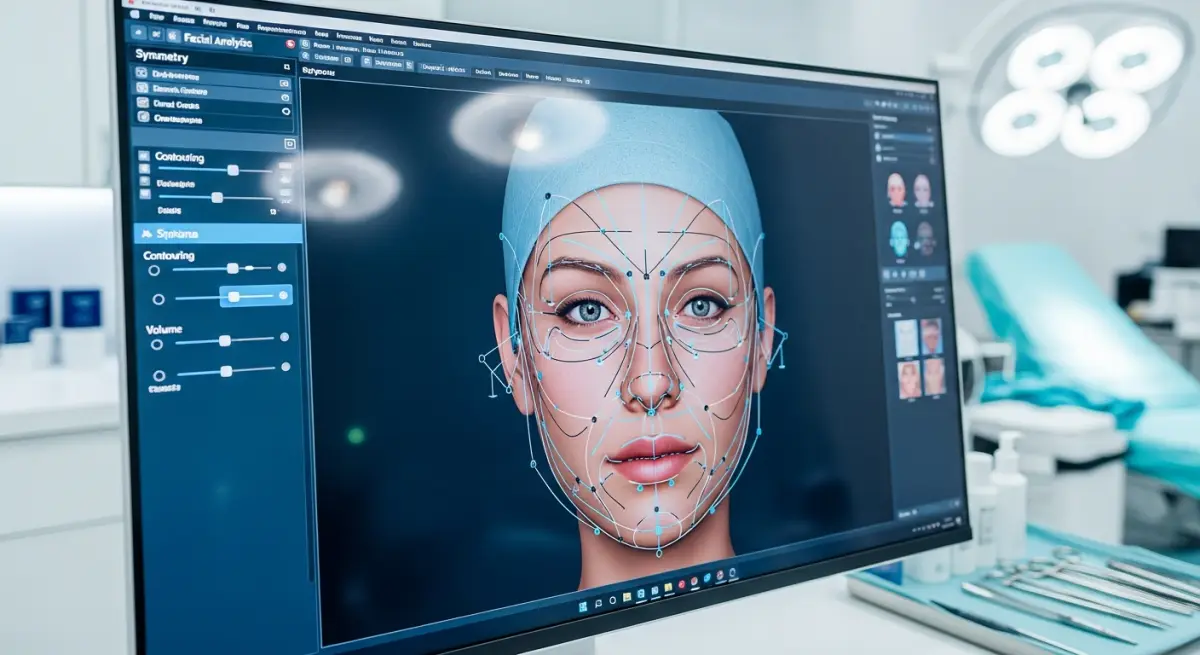
Implants vs. Fat Transfer vs. Fillers
The three approaches to facial volumization — implants, fat transfer, and dermal fillers — each have distinct advantages and appropriate applications. Fillers are non-permanent (lasting 12–24 months), non-surgical, and ideal for conservative, reversible enhancement or trialing a look before committing to surgery. Fat transfer is surgical, uses natural tissue, and is semi-permanent (surviving fat is permanent but some resorption always occurs). Implants are the only option that provides precisely controlled, permanent structural enhancement with predictable long-term volume stability. For patients who want a specific structural change — stronger chin projection, higher cheekbones — that they want to maintain permanently without repeat procedures, implants are the most cost-effective long-term solution despite higher initial investment.
Compare facial implant specialists in Turkey, South Korea, and Spain. Start with a free virtual consultation to discuss your facial goals.
Find Facial Implant ExpertsFrequently Asked Questions
Can facial implants be removed if I change my mind?
Solid silicone implants can be removed relatively straightforwardly through the original incision approach in a procedure typically performed under local anesthesia. Porous polyethylene (Medpor) implants integrate with surrounding tissue and are more complex to remove, requiring general anesthesia and careful surgical technique. Removal does not restore the original anatomy exactly — there may be slight tissue stretching or pocket changes — but the face typically returns very close to the preoperative appearance. Repositioning (adjustment) of an implant is simpler than complete removal.
Will facial implants interfere with MRI or airport security?
Solid silicone and porous polyethylene implants are non-metallic and do not interfere with MRI scanning or trigger metal detectors. Titanium screws used to secure chin implants are MRI-safe and do not set off security scanners. You do not need to declare facial implants at airport security or disclose them for standard MRI scans. For specialized head/neck MRI protocols, inform the radiologist who can adjust imaging parameters if needed, though this is rarely necessary.
How is a chin implant different from jaw surgery (orthognathic surgery)?
Chin implants add volume to the existing chin bone through an additive procedure. Orthognathic jaw surgery (genioplasty, sliding osteotomy) cuts and repositions the actual chin bone — it can move the chin forward, backward, vertically, or laterally to correct bite problems, facial asymmetry, or skeletal deficiencies that implants cannot address. For purely aesthetic chin projection (without bite issues), implants are simpler and equally effective. For significant facial skeletal discrepancy or bite problems, orthognathic surgery is more appropriate.
How long before I can return to work after facial implant surgery?
Most patients can work from home within 7–10 days, once peak swelling has subsided and discomfort is manageable with regular analgesics. Returning to a client-facing or public-facing role may require 10–14 days depending on residual swelling. All surgical effects are hidden from most social interactions by 3–4 weeks.
What qualifications should the surgeon have for facial implants?
Look for a board-certified plastic surgeon or craniofacial surgeon with specific experience in facial implant procedures — not a general cosmetic surgery practice that performs facial implants as a side offering. Request to see their specific facial implant before-and-after gallery, and ask how many such procedures they perform annually. Surgeons performing 50+ facial implant procedures per year develop the three-dimensional anatomical insight and surgical precision that lower-volume practitioners cannot match.