Executive Summary
Over the past five years, the treatment landscape for obesity has undergone a seismic shift with the widespread availability of GLP-1 receptor agonists — sold under brand names such as Ozempic, Wegovy, Mounjaro and Zepbound. The result has been a divergent global impact on bariatric surgery: the United States and United Kingdom have seen stagnation or mild declines in primary procedures, while Turkey — the world's largest bariatric medical tourism destination — has seen volumes continue to climb. Understanding why requires looking at economics, insurance structures, and the fundamental limitations of pharmacological obesity treatment.
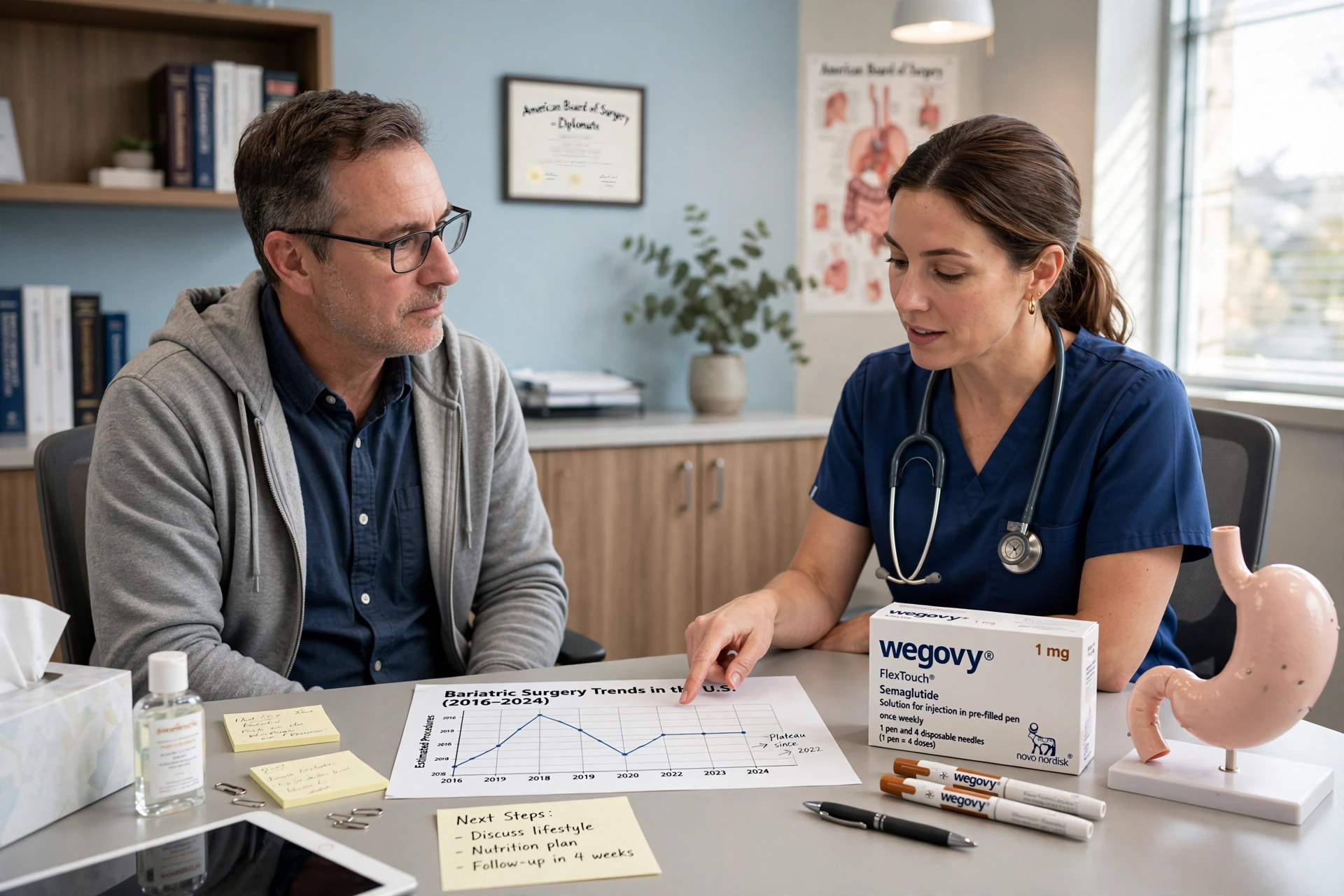
The GLP-1 Timeline: From Diabetes Drug to Global Phenomenon
To understand the surgical data, context is essential. GLP-1 receptor agonists (glucagon-like peptide-1) were initially developed as treatments for type 2 diabetes. Their weight-loss properties were a secondary discovery — one that would eventually reshape the entire obesity management industry.
- <strong>2019–2020:</strong> GLP-1s such as Saxenda (liraglutide) and Ozempic (semaglutide) were available but primarily prescribed for type 2 diabetes. Bariatric surgery remained the clear gold standard for severe obesity.
- <strong>2021:</strong> Wegovy (semaglutide 2.4mg) receives FDA approval specifically for chronic weight management — the first high-dose GLP-1 approved for obesity. A massive cultural and clinical shift begins.
- <strong>2022–2023:</strong> Global supply shortages occur due to skyrocketing demand (the 'Ozempic boom'). Social media — particularly TikTok and celebrity endorsements — propels GLP-1s into the mainstream. Demand outstrips manufacturing capacity worldwide.
- <strong>2024:</strong> Next-generation tirzepatide drugs (Mounjaro/Zepbound), which act on both GLP-1 and GIP receptors, enter broad market availability, easing supply constraints and achieving average weight loss of 20–22% body weight in clinical trials — superior to first-generation GLP-1s.
- <strong>2025–2026:</strong> Oral semaglutide tablets enter late-stage trials. Generic formulations are expected later this decade. The obesity pharmacology market is projected to reach $130 billion globally by 2030.
United States: Plateauing Primary Surgery and a Surge in Revisions
The US represents the world's most mature market for both bariatric surgery and GLP-1 medications, making it the most instructive case study.
The surgical trend: Pre-pandemic (2019), the US performed approximately 256,000 bariatric surgeries annually, according to the American Society for Metabolic and Bariatric Surgery (ASMBS). Coming out of the pandemic (2022), numbers rose to roughly 280,000 — largely driven by pent-up demand from cancelled elective procedures. However, post-2022 growth in primary bariatric surgeries has flattened noticeably, with some data suggesting a slight year-on-year decline in gastric sleeve volumes.
GLP-1 impact on surgical pipelines: For patients with a BMI between 35 and 45 — historically the core sleeve gastrectomy demographic — GLP-1s have become an attractive first-line step. Many patients who would have booked a sleeve consultation in 2020 are now attempting pharmacological management first. Insurance dynamics have also shifted: while GLP-1s historically cost $1,000+ per month out-of-pocket, Medicare and an expanding number of private insurers are now covering them. As drug coverage expands, the cost advantage of surgery diminishes for insured patients.
The revision surgery boom: While primary surgeries plateau, US bariatric surgeons consistently report a surge in revisional procedures. Patients who underwent sleeve gastrectomy or gastric bypass a decade ago are regaining weight. Some are combining GLP-1s with their existing procedure for additive effect; others — when drugs fail or become unaffordable — are returning for surgical revision. Sleeve-to-bypass conversion, sleeve re-sleeving, and band-to-sleeve conversions are all rising. This revisional demand is expected to sustain surgical volumes even as primary procedures decline.
We are seeing a new patient archetype in our US consultations: patients who tried Wegovy for 12–18 months, lost meaningful weight, but regained it when they stopped — often because they couldn't sustain the $1,200/month cost. Surgery then becomes not the first option, but a permanent solution to a lifelong problem.
Senior Bariatric Surgeon, US Metropolitan Bariatric Center
United Kingdom: NHS Backlogs and the Private Pharma Boom
The UK presents a unique and instructive dichotomy between the state-funded NHS and the private healthcare market — one that GLP-1s have significantly disrupted.
NHS surgical volumes: Historically, the UK performs a low volume of bariatric procedures relative to its obesity rate — partly due to strict eligibility criteria (BMI ≥40, or ≥35 with significant comorbidities) and limited NHS commissioning. In 2019, the NHS performed approximately 7,000 bariatric procedures. During the pandemic, this figure collapsed to under 3,000 as elective theatres were repurposed. By 2023/2024, NHS numbers had recovered to approximately 6,000–7,000 — but still well below estimated clinical need, with some estimates suggesting 1 in 30 eligible patients actually accesses surgery.
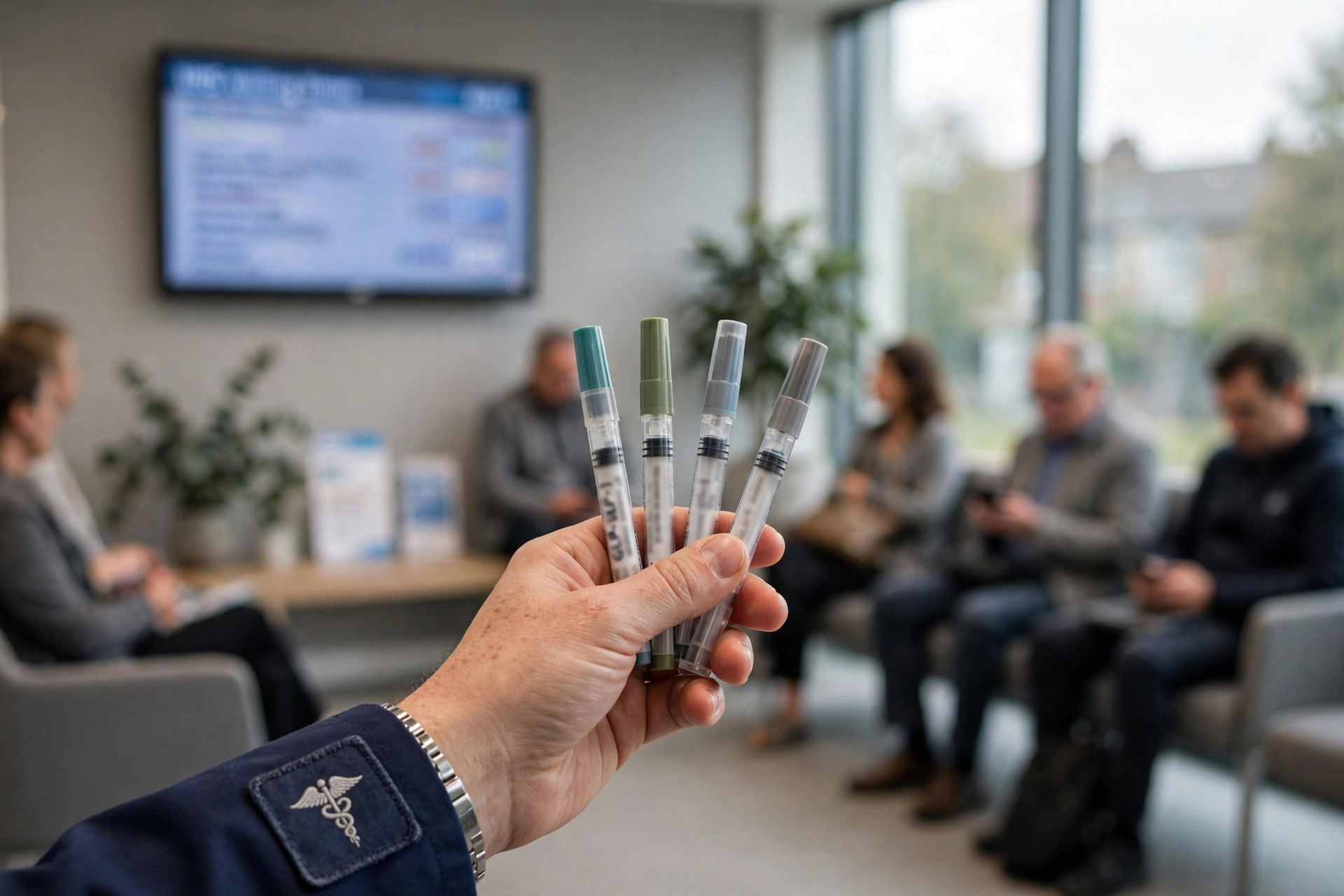
NHS and GLP-1 policy: NHS England has begun a structured rollout of Wegovy for weight management through specialist weight management services, using GLP-1s as a scalable, cost-effective alternative to surgical waitlists. For a health service already under severe elective backlog pressure, pharmacological intervention — administered remotely — is operationally attractive compared to bariatric theatre time.
The private sector shift: For UK patients unable or unwilling to wait for NHS surgery, private bariatric surgery has historically been the alternative — costing £8,000–£15,000 depending on procedure and provider. However, the explosion of online pharmacies prescribing GLP-1s has created a powerful competitor. Patients can access private GLP-1 prescriptions for as little as £150–£300 per month. The perception of injections as 'less invasive' and immediately accessible — no surgery, no waiting list, no hospital stay — has visibly thinned the private bariatric pipeline. However, long-term drug adherence and cost sustainability remain real challenges for this cohort.
Turkey: The Medical Tourism Anomaly
While the US and UK saw domestic surgical pipelines disrupted by GLP-1 availability, Turkey tells a fundamentally different story — one driven by economics rather than clinical trends.
Turkey's surgical volumes: Turkey has rapidly become the world's largest bariatric medical tourism destination. Credible estimates suggest Turkey performs between 30,000 and 50,000 bariatric procedures annually, with up to 80% performed on international patients — primarily from the UK, Germany, the Netherlands, France, and the Gulf states. Istanbul, Ankara, Izmir and Antalya are home to numerous JCI-accredited hospitals with dedicated high-volume bariatric departments. Leading centres such as Istanbul Bariatric Center specialise exclusively in surgical weight management for international patients, with surgical teams performing hundreds of cases per year.
Why GLP-1s haven't dented Turkish medical tourism: The answer is straightforward economics. For an uninsured British patient, a gastric sleeve in Turkey — including return flights, a 5-star hotel stay, and all hospital fees — costs $3,000–$5,000 as a one-time investment. A Wegovy prescription at UK private rates costs £200–£300 per month — meaning just 18–24 months of injections costs the same as surgery, with no permanent anatomical benefit and full weight regain upon discontinuation. For patients making a lifetime cost calculation, surgery wins decisively.
Data from Turkish medical tourism associations indicates that bariatric surgery volumes continued to climb through 2023 and 2024. Foreign patient demand has been largely undeterred by GLP-1 availability. The demographic seeking surgery in Turkey is, in many cases, exactly the patient who has already tried — and been disappointed by — GLP-1 therapy: those who lost weight on injections but regained it, those who suffered severe GI side effects, and those who simply cannot afford $1,000+/month indefinitely.
Explore accredited bariatric clinics in Istanbul with all-inclusive packages from $3,000. Compare costs, read patient reviews, and get a free consultation.
Find Bariatric Clinics in Turkey
Why Bariatric Surgery Is Not Becoming Obsolete
Despite the undeniable impact of GLP-1 medications, the clinical and economic data confirms that bariatric surgery is not becoming obsolete. Three structural factors ensure its continued relevance:
- <strong>The Revisional Surgery Market:</strong> GLP-1s are directly creating new work for bariatric surgeons. Patients who fail pharmacological therapy — due to side effects, cost, weight regain after stopping, or inadequate weight loss for their BMI — frequently present for their first bariatric consultation. Simultaneously, patients who had older procedures a decade ago are seeking surgical revisions, a market segment growing at 8–12% per year in the US.
- <strong>Severe Obesity (BMI >50) Remains a Surgical Domain:</strong> For patients with a BMI above 50, GLP-1s often achieve significant weight loss but rarely deliver the rapid, profound metabolic remission — particularly of type 2 diabetes — that a duodenal switch or gastric bypass provides. Bariatric surgery in this cohort achieves 70–85% excess weight loss and diabetes remission rates of 80–90%. No current GLP-1 therapy achieves comparable results in super-obese patients.
- <strong>Compliance, Cost, and the GLP-1 Rebound:</strong> Clinical studies consistently show that the vast majority of patients who stop GLP-1 therapy regain the weight they lost — typically within 12 months of discontinuation. GLP-1s require lifelong adherence at $1,000+/month (US) or £200–£300/month (UK private) to maintain results. Bariatric surgery restructures anatomy permanently. For patients who cannot sustain drug therapy — financially or physiologically — surgery offers a durable solution that GLP-1s cannot replicate.
The academic consensus is increasingly nuanced: GLP-1s and bariatric surgery are complementary tools, not competitors. Some bariatric centres now routinely use GLP-1 medications pre-operatively to reduce liver size and operative risk, and post-operatively to sustain weight loss plateaus. The ideal patient journey for many individuals may involve both pharmacological and surgical intervention at different stages of their obesity journey. Learn more about the full treatment pathway on our obesity treatment options page.
Ozempic vs Surgery: The True Lifetime Cost Comparison
Perhaps the most illuminating way to understand the market dynamics is through a lifetime cost analysis. The numbers are stark — and explain precisely why Turkey's medical tourism volumes keep rising regardless of GLP-1 availability.
Ozempic vs Bariatric Surgery: Lifetime Cost Comparison
| Treatment Approach | Year 1 Cost | Year 5 Cost | Year 10 Cost | Permanent Result? |
|---|---|---|---|---|
| Wegovy / Ozempic (US, uninsured) | $12,000–$16,800 | $60,000–$84,000 | $120,000–$168,000 | No — weight returns when stopped |
| Wegovy (UK private prescription) | £3,000–£3,600 | £15,000–£18,000 | £30,000–£36,000 | No — weight returns when stopped |
| Gastric sleeve (UK private, £12k avg) | £12,000 | £12,000 | £12,000 | Yes — permanent anatomical change |
| Gastric sleeve (Turkey, all-inclusive) | $3,500–$5,000 | $3,500–$5,000 | $3,500–$5,000 | Yes — permanent anatomical change |
| Gastric bypass (Turkey, all-inclusive) | $4,500–$6,500 | $4,500–$6,500 | $4,500–$6,500 | Yes — superior metabolic outcomes |
GLP-1 drug costs assume no insurance coverage. Turkey costs are all-inclusive (flights, hotel, hospital, post-op follow-up). UK private surgery costs exclude follow-up care.
The cost data above illustrates a critical point: for any patient horizon beyond 3–4 years, a single bariatric surgery — particularly in Turkey — costs substantially less than continuous GLP-1 therapy. The economic case for medical tourism to Turkey is not weakened by GLP-1s; it is strengthened by them. Patients comparing options are increasingly choosing surgery not as a last resort, but as the rational financial and clinical decision. Browse our comparison of gastric sleeve vs bypass to understand which procedure suits your specific situation.
Future Outlook: 2026 and Beyond
US and UK: The introduction of oral GLP-1 pills (currently in late-stage clinical trials) and cheaper compounded or generic versions of semaglutide — expected later this decade — will likely cause a further 10–15% reduction in primary bariatric surgeries in mature Western markets. However, this will be substantially offset by a permanent increase in revisional bariatric surgeries, driven by the GLP-1 bounce-back phenomenon. The net effect on surgical volumes may be relatively modest.
Turkey: As long as the macroeconomic currency disparity persists, Turkey's bariatric surgery industry will continue to thrive, driven by Western patients seeking refuge from the high costs of private healthcare and ongoing pharmacological subscriptions. Turkish surgical centres are also investing heavily in robotic bariatric surgery platforms and hybrid GLP-1 plus surgical protocols, positioning themselves as full-spectrum obesity management destinations rather than purely surgical providers.
The long-term outlook for global obesity management is an integrated, multimodal model: GLP-1s for early intervention and pre-surgical optimisation; bariatric surgery for definitive anatomical correction; and revisional surgery as a growing subspecialty for the generation that underwent primary procedures in the 2010s. Explore our complete guide to weight loss surgery abroad for the full treatment landscape.
GLP-1s or Surgery — Which Is Right for You?
The decision between GLP-1 medications and bariatric surgery is highly individual. Here is a practical framework based on the data:
- <strong>Choose GLP-1s first if:</strong> You have a BMI of 30–40, access to affordable drug coverage, no major comorbidities requiring rapid resolution, and are willing to commit to indefinite pharmacological therapy.
- <strong>Consider bariatric surgery if:</strong> You have a BMI above 40 (or 35+ with diabetes, hypertension, or sleep apnoea), have tried GLP-1s without sustained success, or cannot afford or sustain long-term drug therapy.
- <strong>Consider medical tourism to Turkey if:</strong> You face NHS waitlists of 18+ months, cannot afford UK private surgery at £10,000–£15,000, or are comparing the lifetime cost of GLP-1 prescriptions against a one-time surgical investment.
- <strong>Ask about combined protocols if:</strong> You are a high-BMI patient (>50) where pre-operative GLP-1 therapy for 3–6 months can reduce liver size and significantly lower operative risk before bariatric surgery.
At Flytocure, we connect patients with JCI and ISO-accredited bariatric centres across Turkey, including specialists in Istanbul with extensive experience in both primary and revisional bariatric surgery. Our coordinators can help you compare options, request quotes, and navigate the medical travel process — at no cost to you. View our full list of partner bariatric clinics in Istanbul or use our search to find weight loss surgery clinics worldwide.
Considering bariatric surgery abroad? Get a free, no-obligation quote from accredited bariatric centres in Turkey within 48 hours.
Get My Free Bariatric QuoteFrequently Asked Questions
Has Ozempic reduced bariatric surgery demand globally?
The impact is highly fragmented. In the US and UK, primary bariatric surgeries have plateaued, but revisional surgery is rising. In Turkey — the world's largest bariatric medical tourism destination — volumes have continued to grow through 2024, driven by the economic argument: a one-time surgical trip to Turkey costs less than 18–24 months of private GLP-1 prescriptions.
Is bariatric surgery or Ozempic better for weight loss?
Both are effective, but they work differently. GLP-1 medications like Ozempic and Wegovy achieve average weight loss of 15–20% of total body weight — but weight typically returns when the drug is stopped. Bariatric surgery achieves 25–35% total body weight loss permanently, with superior metabolic outcomes (diabetes remission, blood pressure normalisation) for patients with BMI above 40. For severe obesity (BMI >50), surgery is clinically superior.
How much does Ozempic cost compared to bariatric surgery?
In the US, Ozempic/Wegovy costs approximately $1,000–$1,400 per month without insurance — $12,000–$16,800 per year, ongoing indefinitely. A gastric sleeve in Turkey including flights and hotel costs $3,000–$5,000 as a one-time payment. Over 5 years, US GLP-1 therapy costs $60,000–$80,000; Turkey bariatric surgery costs $3,500–$5,000 total.
What happens when you stop taking Ozempic?
Clinical studies consistently show that the majority of patients regain the weight they lost — typically within 12 months of stopping the medication. This is the key limitation of GLP-1 therapy: it manages obesity pharmacologically while being taken, but does not provide a durable solution without permanent anatomical change, which only surgery delivers.
Why is Turkey's bariatric surgery market growing despite GLP-1s?
Turkey serves a different patient demographic: those making a rational lifetime cost calculation who determine that a one-time surgical trip is far cheaper than decades of drug subscriptions; those who have already tried GLP-1s and regained weight; and those with BMI >45 where pharmacological results are insufficient. As long as price arbitrage between Western and Turkish healthcare persists, the medical tourism pipeline will remain strong.
Who should consider bariatric surgery instead of GLP-1 medications?
Bariatric surgery is appropriate for patients with BMI ≥40 (or ≥35 with significant comorbidities like type 2 diabetes or sleep apnoea), those who have failed or cannot tolerate GLP-1 therapy, patients who cannot afford indefinite drug costs, and those needing rapid metabolic remission (e.g., severe diabetes). For patients on NHS waitlists of 18+ months, medical tourism to Turkey offers an immediate, cost-effective alternative.
Is it safe to have bariatric surgery in Turkey?
Yes. Turkey's leading bariatric hospitals hold JCI accreditation — the same international standard as top US and UK hospitals. Many Turkish bariatric surgeons have trained in Europe or the US and have performed 5,000–15,000 procedures. Complication rates at high-volume accredited centres are comparable to Western benchmarks: major complication rates below 2% for sleeve gastrectomy and below 3% for gastric bypass.