How Clear Aligners Work
Clear aligner orthodontics uses a series of custom-fabricated, transparent plastic trays (aligners) that progressively reposition teeth through carefully planned incremental movements. Each aligner moves teeth by a fraction of a millimeter (typically 0.25–0.33mm per tooth per tray), and wearing each tray for 1–2 weeks advances the teeth to the next position in the treatment sequence. The full treatment series may contain 12–50+ aligners depending on the complexity of tooth movement required. Because the aligners are removable, patients can eat normally, maintain oral hygiene, and socialize without the aesthetic and dietary limitations of traditional fixed braces — the key quality-of-life advantage that drives their overwhelming popularity.
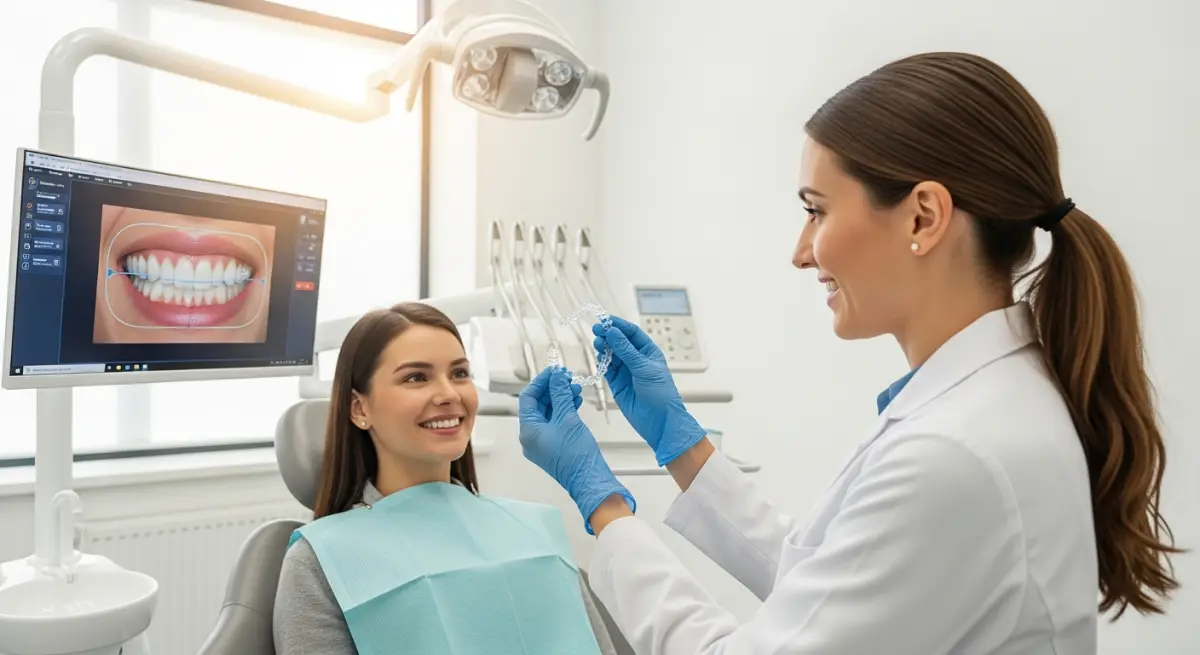
Treatment planning begins with a digital scan of the teeth (using an intraoral scanner like the iTero Element or 3Shape TRIOS) that generates a 3D digital model. The orthodontist or Invisalign-certified dentist designs the tooth movement sequence using proprietary planning software (ClinCheck for Invisalign), creating an animated simulation of every movement from initial position to final result. This digital treatment plan is reviewed and approved by the treating clinician before the aligner series is fabricated. The patient reviews the proposed ClinCheck simulation and confirms acceptance of the planned outcome before any aligners are manufactured — a key feature that sets clear aligner treatment apart from traditional orthodontics where the final result is less predictable at the outset.
Small tooth-colored composite attachments are bonded to selected teeth to provide geometric features that the aligner grips during specific movements — particularly for rotation, torque control, and extrusion of teeth that aligners alone cannot predictably move without mechanical anchorage. These attachments are placed at the beginning of treatment and removed at the end, leaving no permanent marks. Interproximal reduction (IPR) — careful, controlled removal of small amounts of enamel between teeth to create space — is performed at specified stages when the treatment plan requires arch length for movement. Modern IPR uses fine diamond strips or rotary discs to remove 0.1–0.3mm per contact point — clinically insignificant to enamel integrity but creating the necessary space for prescribed movements.
Invisalign vs. Alternative Brands
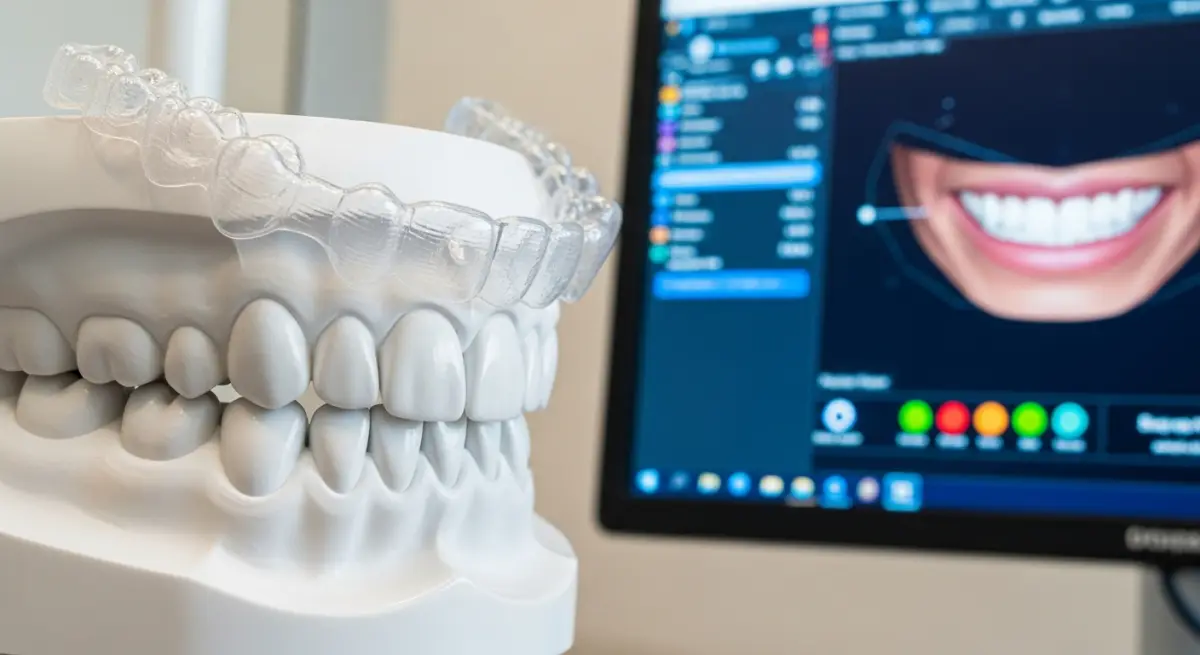
Invisalign (Align Technology) is the market leader with 30+ years of development, the largest clinical database, the most refined treatment planning software (ClinCheck), and the most extensive clinical evidence base among clear aligner systems. It is the only system with FDA 510(k) clearance for treating the full range of orthodontic conditions. The Invisalign provider certification program ensures treating clinicians have completed specific training before prescribing, with the Diamond and Platinum Elite tiers identifying the highest-volume, most experienced providers globally.
Alternative aligner brands — 3M Clarity Aligners, Ormco Spark, uLab, Angelalign (China-based) — offer competitive pricing while using similar thermoformed aligner technology. For straightforward cases (mild crowding, spacing, or simple bite corrections), high-quality alternative brands can achieve excellent results at 20–30% less cost than Invisalign. For complex cases involving significant bite correction, large tooth movements, or cases requiring surgical orthodontics, Invisalign's clinical evidence base and software refinement provide meaningful advantages. Dentakay Dental Clinic in Istanbul — Turkey's most-reviewed dental clinic with 22,000+ patient reviews — offers both Invisalign and premium alternative aligner systems, with case-specific recommendations during consultation.
Cost Comparison by Country
Clear Aligner Treatment Cost Comparison 2025
| Treatment Level | Turkey | Hungary/Spain | USA |
|---|---|---|---|
| Invisalign Lite (< 14 trays) | $1,200 – $1,800 | $1,500 – $2,500 | $3,000 – $5,000 |
| Invisalign Moderate (< 26 trays) | $1,800 – $2,500 | $2,000 – $3,200 | $4,000 – $6,000 |
| Invisalign Full (unlimited trays) | $2,500 – $3,500 | $3,000 – $4,500 | $5,000 – $8,000 |
| Invisalign Comprehensive + Refinements | $3,000 – $4,500 | $3,500 – $5,500 | $6,000 – $9,000 |
| Generic Clear Aligner (local lab) | $800 – $1,500 | $1,000 – $2,000 | $2,000 – $3,500 |
| Retainers (post-treatment) | $200 – $400 | $250 – $500 | $500 – $1,000 |
Prices include all trays in the treatment series, attachments, refinements within the initial treatment, and standard retention planning. Remote monitoring technology may be included at some clinics. Retainers are a separate cost post-treatment.
Turkey is the most popular destination for clear aligner treatment among European medical tourists, with Istanbul's extensive network of certified Invisalign providers offering full comprehensive treatment at $2,500–$3,500 — approximately 55–65% below UK and US pricing. Istanbul dental clinics have invested in state-of-the-art iTero scanners and ClinCheck training, with several clinics reaching Diamond or Platinum Elite Invisalign provider status — a designation that only the highest-volume providers globally achieve and that reflects superior technical expertise and outcomes data.
Hungary, particularly Budapest, is the preferred destination for Western European clear aligner patients, combining competitive pricing with excellent clinical quality and straightforward travel logistics from the UK, Germany, Austria, and the Czech Republic. Budapest has developed a concentrated dental tourism ecosystem with English-speaking orthodontists at internationally certified clinics who provide the full diagnostic and treatment planning experience within a single extended visit. Spain serves patients from the UK and Northern Europe seeking a combination of dental treatment and a Mediterranean holiday, with accredited Invisalign clinics in Barcelona and Madrid offering comprehensive clear aligner programs at 40–50% below UK private practice pricing.
The Hybrid Remote Treatment Model
The most transformative development for clear aligner medical tourism has been the hybrid remote monitoring model, which allows patients to begin treatment abroad and complete the majority of tray progressions through remote oversight — reducing the number of in-person visits to the foreign clinic to as few as 2–3 total visits (initial scan and attachments, mid-treatment review, final removal and retention). Remote monitoring platforms — Dental Monitoring, OrthoPhoto, and clinic-specific apps — use AI analysis of patient-submitted photos (taken weekly using a standardized intraoral photo cheek retractor) to track tooth movement progress and detect complications without requiring in-person visits.
In practice, the hybrid model works as follows: Visit 1 abroad (typically 2–3 days) for digital scanning, clinical examination, treatment planning review, and placement of attachments with the first set of trays. The full tray series is then shipped to the patient's home address, with remote monitoring platform access provided. The patient progresses through trays every 1–2 weeks, uploading weekly photos reviewed by the treating dentist. If progress is satisfactory, the dentist approves advancement to the next tray. If anomalies are detected, they are addressed remotely or, rarely, an unscheduled in-person visit is required. A mid-treatment review visit at 3–6 months confirms tracking. The final visit completes treatment, removes attachments, and delivers custom retainers. This model makes clear aligner treatment abroad genuinely practical for patients who cannot make multiple trips.
What to Expect: Start to Finish
The initial visit to a clear aligner clinic abroad involves: comprehensive orthodontic examination including clinical evaluation of teeth, bite, and jaw function; intraoral digital scan (5–10 minutes, comfortable and non-invasive); facial photographs and bite registration; discussion of goals, timeline, and treatment options; ClinCheck setup and submission to the aligner laboratory. Most clinics can show a preliminary digital simulation of expected tooth movement using their planning software during this first visit, giving you an immediate impression of the planned result. Treatment cost is confirmed after reviewing the case complexity.
The laboratory fabricates the full tray series in 2–4 weeks (Invisalign typically ships in 3 weeks from approved plan submission). A second short visit is arranged for attachment placement and delivery of the first trays — this can sometimes be combined with the initial visit if the patient has travel flexibility, with the trays shipped to home afterward and attachments placed during a brief second day visit. From delivery of the first trays, the active treatment phase — wearing each set of trays 20–22 hours daily, removing only for eating and oral hygiene — proceeds according to the planned timeline. Most Invisalign Full cases complete in 12–18 months; shorter Lite cases complete in 4–8 months.
Straighten your smile with clear aligners at accredited clinics abroad. Get a free Invisalign consultation and personalized quote.
Get My Invisalign QuoteFrequently Asked Questions
Can Invisalign fix severe bite problems?
Invisalign Comprehensive (the most advanced treatment level) can address significant overbite, underbite, and crossbite through innovative features including mandibular advancement (for correcting overbite in growing patients), precision bite ramps, and power ridges for torque control. For severe skeletal discrepancies (jaw size mismatches), orthognathic surgery combined with orthodontics may be required — aligners alone cannot correct underlying bone problems. The treating orthodontist's assessment of your specific malocclusion will determine whether aligner treatment alone can achieve your goals.
How do I maintain remote treatment continuity if something goes wrong at home?
Most clear aligner clinics abroad with hybrid protocols have arrangements with partner clinics in major cities globally, or will coordinate with a local dentist in your area for minor in-person interventions (aligner adjustments, attachment repairs, IPR). The treating clinic abroad can send treatment instructions to your local dentist for specific interventions needed. For significant tracking failures requiring comprehensive re-evaluation, an additional in-person visit to the treating clinic abroad may be necessary — plan for this possibility when selecting your clinic and negotiating treatment terms.
What happens if I need refinements after treatment ends?
Refinements — additional aligner series to fine-tune tooth positions after the initial series is complete — are commonly needed (approximately 30–40% of comprehensive cases require some refinement). Invisalign's Comprehensive and Complete packages include unlimited refinements within the treatment period. When getting treatment abroad, clarify explicitly what the refinement policy is: are refinements included in the fee, or charged additionally? If additional refinements require new scans, how is this handled remotely? Clinics with well-developed international patient protocols typically offer at least one round of free refinements and can ship new trays internationally.
How important is it to wear aligners for the full 20-22 hours per day?
Compliance is the single most important factor determining clear aligner treatment success. Insufficient wear time (less than 20 hours daily) causes teeth to move off the planned trajectory — resulting in poor tracking, extended treatment times, and potentially requiring additional trays. Modern Invisalign trays include compliance indicators (blue indicators that fade with wear) on some products, and Dental Monitoring can detect signs of poor tracking from photos. Building the habit of removing aligners only for eating, drinking (anything except water), and oral hygiene — and replacing them immediately — is fundamental to achieving the planned result on schedule.
What are the alternatives to Invisalign for straightening teeth abroad?
Traditional fixed braces (metal or ceramic brackets with archwires) remain an excellent and often more economical option for complex cases, particularly those requiring significant tooth extrusion, root parallelism, or large-scale arch expansion that aligners cannot predictably achieve. The limitation of fixed braces for dental tourism is that they require monthly appointments for wire adjustments throughout the treatment — making them less practical for medical tourism patients unless the entire treatment will be completed in the destination country. For adults seeking cosmetic tooth alignment, lingual braces (brackets on the inner tooth surfaces, invisible from outside) are offered at some international clinics as an alternative to aligners with superior control for certain movements.