Understanding All-on-6 Implants
All-on-6 is a full arch dental implant technique that restores an entire upper or lower dental arch using six titanium implant fixtures anchored into the jawbone. A complete dental prosthesis (12–14 ceramic or acrylic teeth set in a gum-colored base) is permanently attached to these six implants, replacing all missing teeth in the arch with a fixed, stable, non-removable solution. The procedure is designed for patients who have lost most or all of their teeth in one or both arches — whether through decay, gum disease, failed dental work, or trauma — and want a permanent, natural-feeling replacement that does not require removal for cleaning, does not slip during eating or speaking, and allows chewing virtually all foods including hard and crunchy items that conventional dentures cannot manage.
The concept of full arch rehabilitation on implants was revolutionized by the All-on-4 technique (using 4 implants with the posterior two placed at 45-degree angles to maximize bone engagement without bone grafting), but the All-on-6 configuration has emerged as the preferred approach when bone volume is adequate. The sixth implant provides additional support in the posterior jaw area — where biting forces are greatest — distributing chewing loads more evenly across the arch, reducing stress concentration on individual implants, and providing a safety margin if any one implant fails during integration. For patients with full-arch rehabilitation who want the most durable, stable long-term solution and have adequate bone volume, All-on-6 is the protocol of choice at leading implant centers internationally.
The treatment is typically completed in a single surgical visit, with temporary teeth (immediate loading prosthesis) fitted the same day as implant placement — giving patients the experience of leaving the clinic with a complete set of teeth after surgery. This 'teeth in a day' capability has transformed the patient experience of full arch rehabilitation, eliminating the weeks of living with no teeth or an ill-fitting temporary denture that characterized earlier implant protocols. The definitive final prosthesis (typically zirconia or high-strength ceramic) is fabricated and fitted 3–6 months after surgery when implant osseointegration (fusion with jawbone) is confirmed. Leading Turkish clinics like Dentakay Dental Clinic — with 22,000+ patient reviews and Straumann-certified laboratory — complete full-arch All-on-6 cases with digital workflow precision that minimizes prosthetic complications.
All-on-6 vs All-on-4: Key Differences
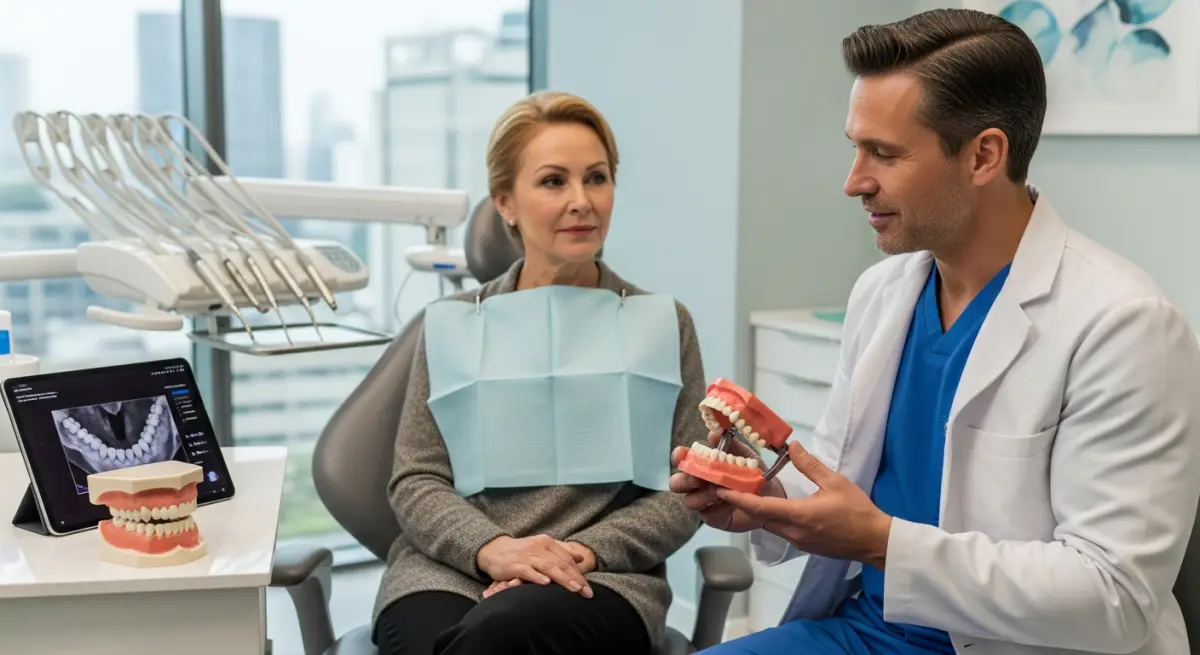
The fundamental difference between All-on-4 and All-on-6 is the number of implants distributing the load of the full arch prosthesis. All-on-4 uses four implants — two placed vertically in the anterior jaw and two placed at 45-degree angles in the posterior jaw — to support a complete arch. The 45-degree angulation of the posterior implants avoids the need for sinus lifting (upper jaw) or engages more bone volume (lower jaw), making All-on-4 feasible even with moderate bone atrophy. All-on-6 places six implants in a more evenly distributed pattern, including two posterior implants in vertical or near-vertical angulation, providing greater biomechanical stability and more uniform load distribution across the arch.
Clinical evidence suggests that the greater number of implants in All-on-6 is associated with lower per-implant stress concentrations under chewing loads — a factor that becomes relevant over time as marginal bone around implants responds to mechanical loading. Long-term implant survival studies (10–15 year follow-up data) show consistently high survival rates for both protocols at experienced centers (95–98%), but implant-supported prostheses with more anchoring implants tend to show less marginal bone loss over time. For younger patients expected to wear their prosthesis for decades, or for patients with demanding dietary habits, the additional mechanical security of All-on-6 is often considered the more durable long-term investment.
The cost difference between All-on-4 and All-on-6 (approximately 15–25% more for the two additional implants) is modest relative to the total treatment cost, making the incremental investment in All-on-6 reasonable when bone volume permits. The primary indication for All-on-4 over All-on-6 remains insufficient bone volume in the posterior jaw — where bone atrophy after tooth loss has been extensive enough that placing posterior implants vertically would require bone grafting. In these cases, the tilted All-on-4 posterior implants are a clinically sound solution that avoids bone grafting complexity. A thorough 3D cone beam CT (CBCT) scan of the jawbone is essential for the treatment planning decision between All-on-4 and All-on-6.
Cost Comparison by Country
All-on-6 Dental Implants Cost Comparison 2025 (Per Arch)
| Country | Economy Package | Premium (Swiss/Korean Implants) | Savings vs USA |
|---|---|---|---|
| USA | $28,000 – $35,000 | $35,000 – $45,000 | — |
| Turkey | $7,000 – $9,500 | $9,500 – $14,000 | Up to 70% |
| Hungary | $9,000 – $12,000 | $12,000 – $16,000 | Up to 65% |
| Poland | $8,000 – $11,000 | $11,000 – $15,000 | Up to 65% |
| Spain | $11,000 – $15,000 | $14,000 – $20,000 | Up to 55% |
| Mexico | $9,000 – $13,000 | $12,000 – $17,000 | Up to 60% |
| Thailand | $9,000 – $13,000 | $11,000 – $16,000 | Up to 60% |
Prices include all 6 implant fixtures, abutments, temporary prosthesis (teeth in a day), final definitive prosthesis, and standard post-operative care. Bone grafting if required adds $500–$3,000 per arch. Full mouth (upper + lower) doubles the above costs.
Turkey is the world's leading destination for full arch implant surgery, with Istanbul home to dozens of highly specialized implant clinics that perform All-on-4 and All-on-6 procedures at immense volume — contributing to the surgical expertise and workflow efficiency that delivers outstanding results at dramatically lower costs. Beyazada Dental Clinic and Dentakay Dental Clinic are among Istanbul's most experienced implant centers, both using premium European implant systems (Straumann, Nobel Biocare) and in-house digital laboratories that fabricate prosthetics with the same CAD/CAM precision as US dental laboratories. All-on-6 with Swiss Straumann implants and full zirconia final prosthesis can be completed in Istanbul for $9,500–$14,000 per arch — versus $35,000–$45,000 per arch in the US for equivalent components and technology.
The Treatment Process
All-on-6 treatment follows a structured clinical pathway. During the initial consultation visit (1–2 days), the implant surgeon performs a comprehensive oral examination, takes a CBCT 3D scan of the jawbone, and designs the implant placement plan digitally using guided surgery software. Any existing teeth requiring extraction are identified. A provisional prosthesis design is planned in advance using digital smile design principles, ensuring patients know exactly what their teeth will look like before surgery begins.
The surgical appointment (Day 1–2 of treatment) involves: extraction of remaining failing teeth, implant placement (30–60 minutes per arch under local anesthesia), fitting of the immediate temporary prosthesis same day (teeth in a day). Patients leave the clinic with a full set of functional temporary teeth. Over the following 3–6 months, implants undergo osseointegration. The definitive final prosthesis appointment (typically requiring 2–3 visits over 3–5 days) involves removal of the temporary bridge, prosthetic abutment connection, digital impression or scanning, prosthetic try-in to verify fit, aesthetics, and occlusion, and final delivery of the permanent zirconia or hybrid ceramic prosthesis. Most international patients plan two trips: the surgical trip (5–7 days) and the final prosthesis fitting trip (4–5 days) 4–6 months later.
Implant Brands & Quality
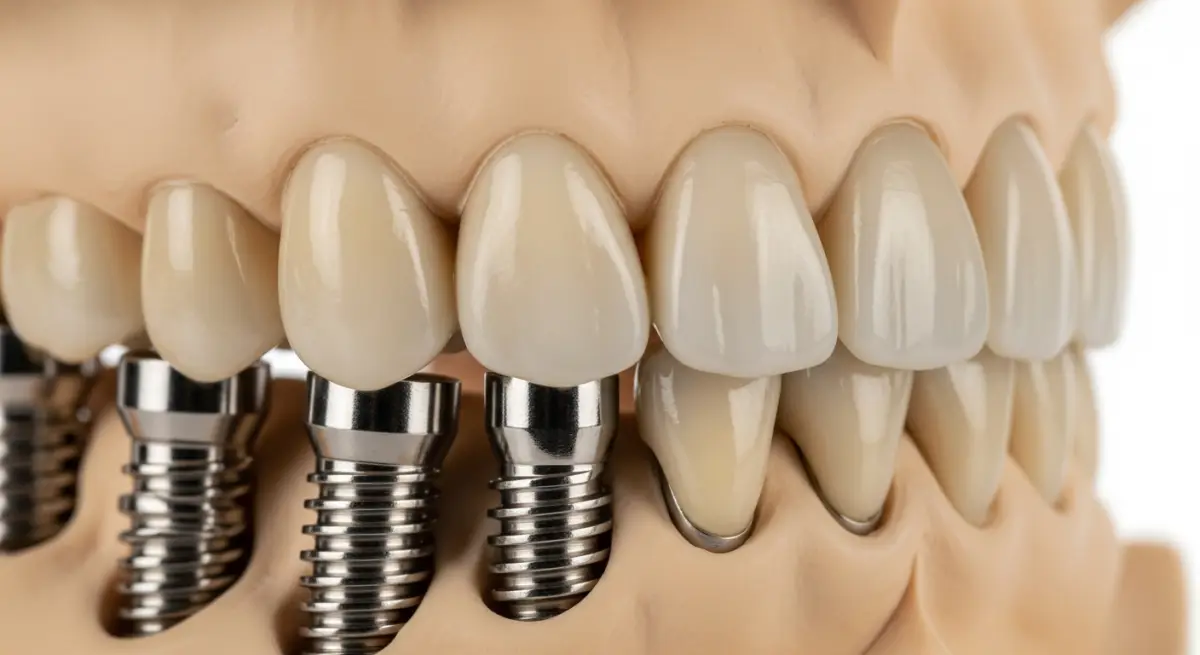
Implant brand choice matters for long-term outcomes and is one of the most important quality questions to ask when comparing clinics abroad. The gold standard brands — Straumann (Switzerland), Nobel Biocare (Sweden/USA), Dentsply Sirona (Germany), and Zimmer Biomet — have 20–40 years of clinical outcome data, standardized component dimensions that allow prosthetic components to be sourced globally, and established recall protocols if components ever need replacement. Premium brand implants cost $300–$600 per fixture at the manufacturer level; clinics using these brands reflect this in their pricing.
Lower-cost 'economy package' pricing at some clinics may involve less-documented implant brands from developing country manufacturers. These implants may perform adequately for some patients, but have limited long-term data, narrower component compatibility, and potential difficulties sourcing compatible prosthetic components years later if the patient needs adjustments or repairs through their home dentist. For full-arch cases requiring 6 implants per arch (and potentially 12 implants for full mouth rehabilitation), the implant brand is particularly important — ask explicitly for the brand name, country of manufacture, and request to see the brand's published clinical data before accepting treatment.
Restore your complete smile with All-on-6 implants at leading dental clinics abroad. Get a full treatment quote including implant brand details.
Get My All-on-6 QuoteFrequently Asked Questions
How long do All-on-6 implants last?
With premium implant brands and proper maintenance, All-on-6 implants have 15–20+ year documented lifespans, with many cases showing indefinite longevity. The implant fixtures themselves are titanium and can last a lifetime if osseointegration is complete and maintained. The prosthetic bridge (the false teeth) typically requires replacement at 10–20 years depending on material: acrylic prostheses wear more quickly (typically 5–10 years); zirconia prostheses are far more durable (15–20+ years). Proper maintenance — professional cleaning every 6 months, avoiding smoking, maintaining systemic health — maximizes implant longevity. Many patients treated 20+ years ago with early implant protocols retain functioning implants today.
Do I need bone grafting before All-on-6?
Whether bone grafting is needed depends on the quantity and quality of bone remaining in your jaw after tooth loss — assessed from a CBCT 3D scan. Many patients with long-term tooth loss have significant bone atrophy requiring bone grafting before implant placement. For cases with inadequate bone, options include: sinus lifting (upper jaw), alveolar ridge augmentation, or using longer/wider diameter implants that engage available bone more effectively. If bone grafting is required, it typically adds 4–6 months to the overall treatment timeline (allowing the grafted bone to mature before implant placement) and $500–$3,000 per arch to the total cost.
What can I eat with All-on-6 implants?
After the initial 3–6 month healing phase (during which dietary restrictions include avoiding hard, sticky, or tough foods), patients with fully integrated All-on-6 prostheses can eat virtually all foods — including steak, crusty bread, nuts, and raw vegetables — that are impossible with conventional dentures. The fixed, non-removable bridge transmits chewing forces directly to the jawbone through the implants, functioning essentially like natural teeth. During the osseointegration healing phase, a soft diet is required to avoid mechanical stress on the healing implant-bone interface.
How many trips abroad are needed for All-on-6 treatment?
Standard All-on-6 treatment typically requires two trips: Trip 1 (5–7 days) for extraction of failing teeth (if needed), implant placement surgery, and delivery of immediate temporary prosthesis. After 4–6 months of osseointegration (during which you return home), Trip 2 (3–5 days) for final prosthesis fabrication and delivery. Some clinics can complete the final prosthesis within the first trip using an accelerated protocol with an in-house digital laboratory, though this extends the initial trip to 7–10 days. Discuss the two-trip versus one-trip protocol with your clinic during initial consultation.
Can I continue maintenance with my local dentist after getting All-on-6 abroad?
Yes — any qualified general dentist or periodontist can perform the professional cleaning and maintenance appointments required for implant-supported prostheses. The international clinic will provide a complete treatment record including implant brand, diameter, length, connection type, and prosthetic component specifications — information your local dentist needs for maintenance and any future repairs. Most implant complications (loosened screws, minor prosthetic fractures) can be managed by any dentist with implant prosthetics training using the treatment records provided by the placing clinic.