Understanding Brow Lift Surgery
Brow ptosis — the descent of the eyebrow below its youthful position at or above the orbital rim — is one of the most impactful age-related facial changes because the position of the eyebrow profoundly influences facial expression and perceived alertness and emotion. When the brows descend, they create a combination of effects: excess upper eyelid skin (hooding) that visually reduces the eyelid opening; deep horizontal forehead creases from chronic frontalis muscle overactivity as the muscle perpetually contracts to compensate for the descending brows; glabellar (11 lines) and frown lines from habitual brow furrowing; and a persistent tired, stern, or unhappy resting expression that doesn't reflect the patient's actual emotional state.
Brow lift surgery elevates the descended brow tissues to their anatomically correct position, simultaneously correcting all these sequelae — the upper eyelid hooding is reduced, the forehead lines are smoothed, and the resting expression is refreshed. Many patients seeking upper eyelid surgery (blepharoplasty) actually have brow ptosis as the primary underlying issue, and addressing the brow without addressing the eyelid produces better results than eyelid surgery alone. An experienced facial surgeon assesses both the brow position and eyelid anatomy before planning surgical correction, sometimes recommending a combined approach or brow lift alone rather than isolated blepharoplasty.
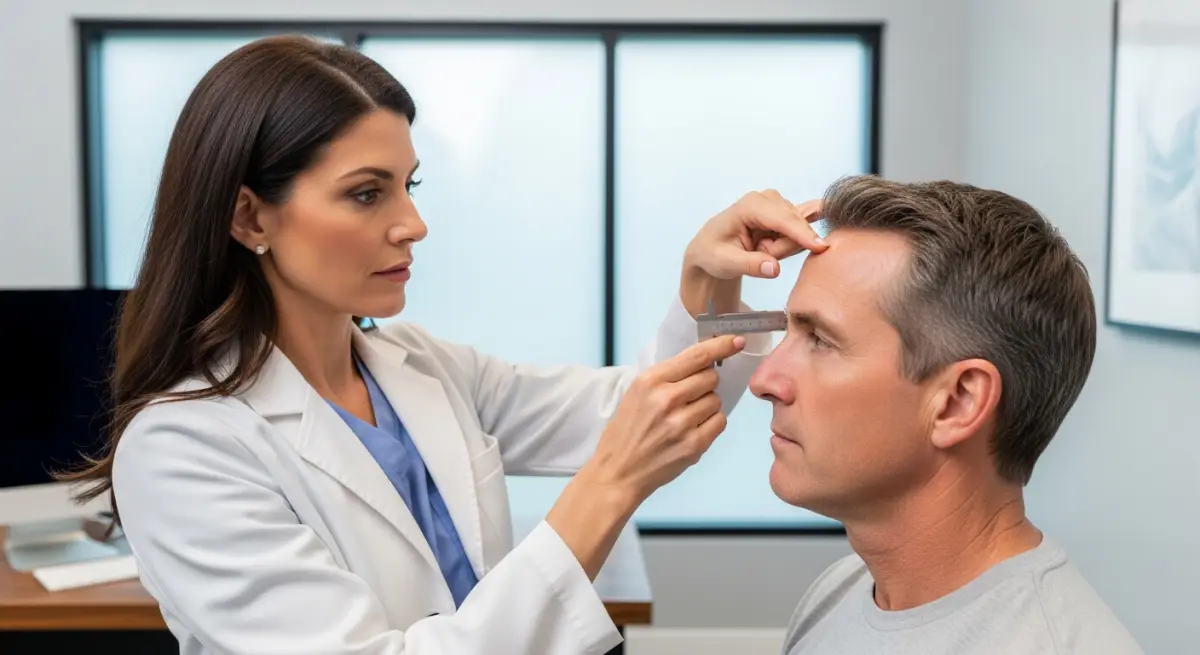
The ideal brow position varies by gender and individual facial aesthetics. In women, the aesthetic brow follows a gentle arch with the peak at the lateral third to quarter of the brow, sitting at or slightly above the orbital rim. In men, the brow position is typically flatter, with less arch, sitting at or just below the orbital rim. These gender differences must be carefully considered in surgical planning — inadvertently feminizing a male brow or flattening a female brow produces results that look unnatural. At Acıbadem Maslak Hospital in Istanbul, facial surgeons use digital morphing software during preoperative planning to demonstrate expected brow elevation to patients.
Four Surgical Approaches
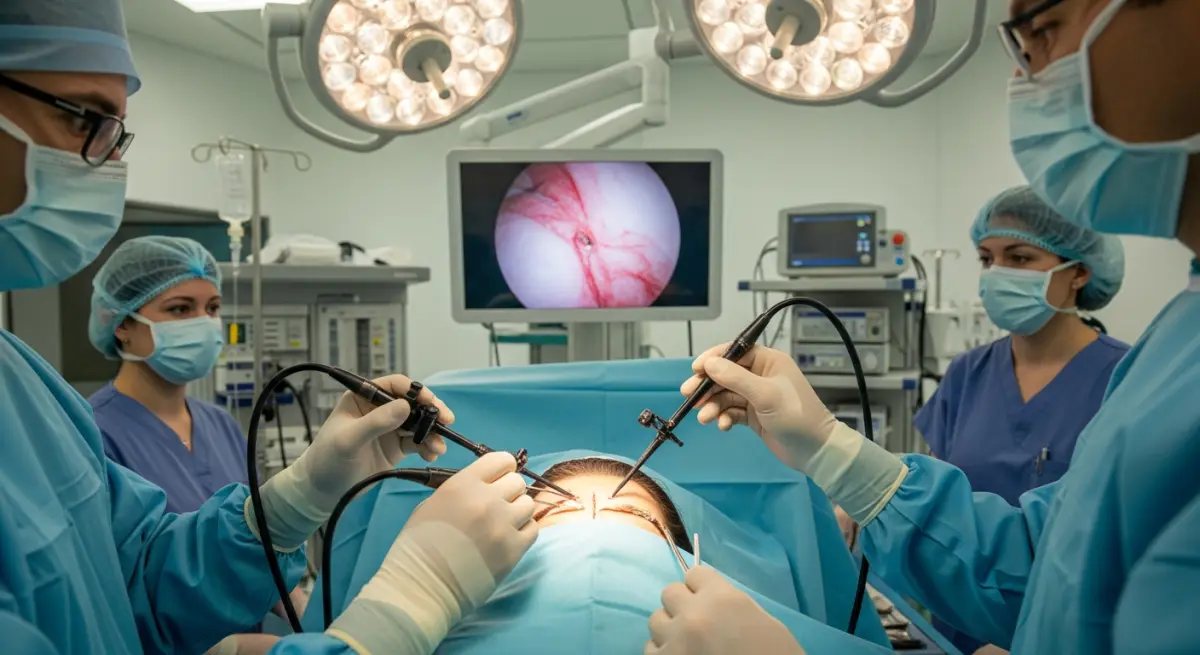
The endoscopic brow lift is the current gold standard for most candidates. Three to five small incisions (1cm each) are made within the hairline. An endoscope (tiny camera) allows the surgeon to directly visualize the deep tissue layers, releasing the muscles and ligaments anchoring the brow in its descended position. The elevated tissue is secured with specialized fixation devices (Endotine, titanium screws, or tunnel fixation). Advantages: minimal scarring, reduced hair loss risk, faster recovery than open techniques. Limitation: less effective for patients with very low hairlines or significant skin excess who may actually benefit from simultaneous scalp skin removal.
The coronal (open) brow lift uses a long incision across the top of the scalp from ear to ear, allowing wide exposure and maximum tissue lifting and reshaping. It is the most powerful approach for patients with very pronounced forehead aging but is less commonly used due to its extensive scar, risk of scalp numbness, and potential to raise the hairline. The pretrichial (hairline) incision brow lift uses an incision along the anterior hairline, allowing the surgeon to remove excess forehead skin without raising the hairline — preferred for patients who already have a high forehead. The direct brow lift uses a small incision at the upper border of the brow, allowing precise elevation of the brow tissue — most effective for patients with deep upper brow furrows and visible brow asymmetry that require very precise, targeted correction.
Cost Comparison by Country
Brow Lift Surgery Cost Comparison 2025
| Country | Endoscopic | Direct / Open | Savings vs USA |
|---|---|---|---|
| USA | $4,500 – $6,500 | $5,000 – $8,000 | — |
| Turkey | $2,000 – $3,200 | $2,500 – $4,000 | Up to 55% |
| Spain | $2,500 – $4,000 | $3,000 – $5,000 | Up to 50% |
| South Korea | $2,800 – $4,500 | $3,500 – $5,500 | Up to 45% |
| Thailand | $2,500 – $4,000 | $3,000 – $5,000 | Up to 50% |
| Czech Republic | $2,200 – $3,500 | $2,800 – $4,500 | Up to 50% |
| India | $1,500 – $2,800 | $2,000 – $3,500 | Up to 60% |
Prices include surgeon, anesthesia, facility, and standard aftercare. Direct brow lift via hairline or forehead crease incisions is typically less expensive than endoscopic technique. Prices are inclusive.
Turkey represents the best value destination for brow lift surgery in Europe, with Istanbul's highly experienced facial plastic surgeons offering endoscopic brow lift at $2,000–$3,200 — 50–60% less than comparable US private practice costs. Spanish clinics offer an excellent alternative for European patients, combining competitive pricing with easy access from UK and Northern Europe and the appeal of recovery in a Mediterranean environment. South Korea's reputation for technical precision in facial surgery extends to brow lift procedures, making it a preferred destination for patients who prioritize cutting-edge technique and the most refined aesthetic results.
Refresh your appearance with expertly performed brow lift surgery abroad. Get free consultation from leading facial surgeons.
Explore Brow Lift OptionsCombining With Facelift or Eyelid Surgery
Brow lift is most commonly combined with upper eyelid surgery (blepharoplasty) and facelift in comprehensive facial rejuvenation programs. This combination addresses all three zones of facial aging simultaneously: the upper face (brow and forehead), mid face (addressed by facelift), and eyelids — producing a harmoniously rejuvenated result that no single procedure achieves alone. Performing these procedures simultaneously reduces total recovery time compared to staging them separately, and the combination is usually offered at a significant package discount at international clinics. Most patients planning significant facial rejuvenation who travel internationally schedule all three procedures in one surgical session.
Recovery: What to Expect
Endoscopic brow lift recovery is generally well-tolerated. Forehead swelling and bruising peak at 48–72 hours, affecting the eyelids (black eyes) in many patients due to the dependent flow of fluid. Most visible bruising resolves within 10–14 days. Scalp tingling and numbness are expected as sensory nerves recover — this is temporary in the vast majority of cases. Incision care involves gentle cleaning and keeping the hairline incisions dry for 7–10 days. Most patients are comfortable returning to desk work and social activities at 2 weeks, with hair styling resuming at 3–4 weeks. Final brow position is established at 3–6 months when all swelling has resolved.
Restore your youthful brow position with expert surgery abroad. Connect with certified facial surgeons in Turkey, Spain, and beyond.
Find My Brow Lift SurgeonFrequently Asked Questions
Will a brow lift make me look surprised or unnatural?
Overcorrection — creating the permanently surprised expression — is the most feared side effect of brow lift surgery and is avoided by experienced surgeons through conservative elevation amounts and careful assessment of pre-operative brow position. Modern endoscopic techniques allow precise, controlled elevation. Surgeons targeting natural-looking results elevate the brow 4–8mm above its current position, reaching the anatomically correct height for the patient's age and facial structure rather than the maximum possible elevation. Reviewing a surgeon's before-and-after gallery specifically for brow lift cases will give you a clear indication of their aesthetic approach.
How long do brow lift results last?
Brow lift results are long-lasting but not permanent — the underlying aging process continues. Endoscopic brow lift results typically last 7–12 years before meaningful re-descent occurs. Open/coronal brow lift results last somewhat longer. Most patients do not need repeat brow lift surgery; they may pursue complementary non-surgical treatments (Botox, fillers) over time to maintain the result. Patients who maintain a healthy lifestyle, sun protection habits, and avoid smoking preserve brow lift results for the longest duration.
Will the brow lift affect my ability to raise my eyebrows?
Immediately after surgery, forehead movement is limited due to swelling and temporary weakness. Normal forehead muscle function returns as healing progresses, typically at 6–12 weeks. Most patients regain full ability to express emotions through the forehead naturally. In rare cases — more common with coronal open techniques than endoscopic — permanent frontalis muscle weakness can cause reduced ability to raise the brows on one or both sides; this is why experienced surgeons use the endoscopic approach for most candidates.
I've been told I need eyelid surgery — might I actually need a brow lift instead?
This is a very common clinical situation. Excess upper eyelid skin (dermatochalasis) is sometimes a consequence of brow ptosis rather than primary eyelid excess — the descended brow pushes redundant skin over the eyelid. Removing eyelid skin without elevating the brow may actually pull the brow down further (because the weight of the eyelid skin acts as a mechanical support for the brow) and may produce inadequate improvement. A thorough preoperative assessment by an experienced facial surgeon should include manual elevation of the brow to assess how much of the eyelid hooding resolves when the brow is in its correct position.
Is the endoscopic approach available at clinics abroad?
Yes, endoscopic brow lift is widely available at internationally accredited cosmetic surgery centers in Turkey, Spain, Thailand, and South Korea. The endoscopic approach requires specific camera equipment and specialized surgical training — confirm during your consultation that the surgeon is specifically trained in endoscopic technique and that the facility has appropriate endoscopic equipment. Many high-volume international clinics perform hundreds of endoscopic procedures annually, with surgeon experience and equipment quality matching or exceeding many Western practices.