Who Is a Candidate for Brachioplasty?
Brachioplasty candidates fall into two primary groups: patients with significant skin laxity following major weight loss (post-bariatric patients are the largest group), and individuals experiencing natural age-related skin changes in the upper arm area where the skin becomes loose and hanging despite maintaining normal body weight. In the first group, the excess skin is typically more pronounced, extending further down the arm and often with significant tissue redundancy. In the second group — often referred to colloquially as 'bat wings' — the skin laxity is more moderate and may be accompanied by some fatty tissue that can be addressed with liposuction as an adjunct.
The ideal brachioplasty candidate has: excess skin in the upper arm that does not respond to exercise or weight loss; stable body weight (with no plans for significant further weight loss); good overall health without conditions that impair wound healing; realistic expectations about results and the inevitability of a scar along the inner arm; and a non-smoking status (smoking significantly increases wound complication rates in arm lift surgery due to the tension on incisions). Younger patients with good skin elasticity who are bothered primarily by fatty excess without significant skin laxity may achieve satisfying results with arm liposuction alone, avoiding the scar burden of brachioplasty.
The extent of skin laxity determines the appropriate procedure. Grade I (mild laxity, good elasticity) is best treated with liposuction alone. Grade II (moderate laxity extending to the elbow area) benefits from a short-scar or mini brachioplasty with the incision limited to the axilla (armpit) area. Grade III (significant laxity extending from axilla to elbow) requires full brachioplasty with an incision running the length of the inner arm. The trade-off in brachioplasty — between the degree of improvement and the length of the inner arm scar — is the central consideration that patients must weigh carefully with an experienced surgeon.
Brachioplasty Techniques
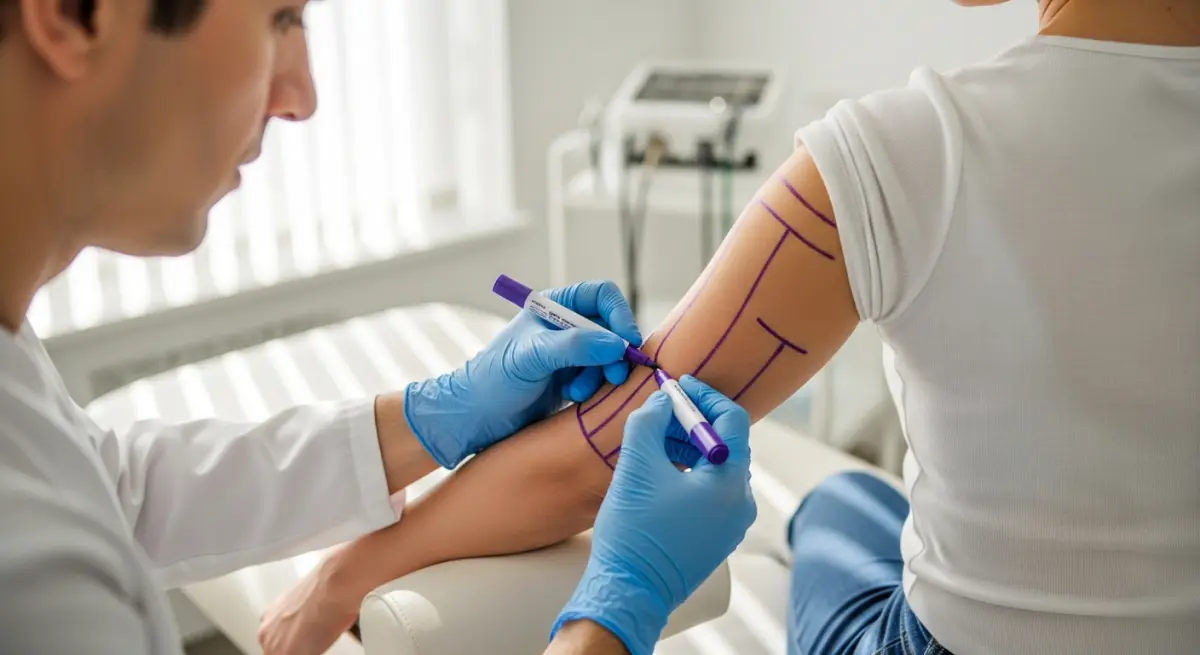
The traditional full brachioplasty uses an incision running from the axilla (armpit) to the elbow along the inner aspect of the upper arm. Tissue is excised in an elliptical pattern, and the wound is closed under careful tension management to achieve maximum smoothness without creating a tight, restricted feel. The placement of the incision along the inner arm (medial aspect) aims to position the scar in the least visible location when the arm is at rest. Modern techniques focus on suturing in multiple layers — deep fascial sutures take the primary tension, reducing the load on superficial sutures and improving scar quality.
The extended brachioplasty extends the incision into the chest wall to address skin laxity at the axilla and lateral chest that is common after very large weight losses. Liposuction-assisted brachioplasty adds targeted liposuction before skin excision to remove the fatty component and allow the skin to retract before the definitive excision — this reduces the amount of skin that needs to be removed and can improve the final contour. BodyTite radiofrequency-assisted liposuction offers a non-excisional approach with skin tightening benefit for mild cases but is not effective for significant skin laxity requiring true skin removal. At Acıbadem Maslak Hospital, body contouring specialists use vascular-preserving techniques that minimize the risk of postoperative swelling and speed recovery.
Cost Comparison by Country
Arm Lift (Brachioplasty) Cost Comparison 2025
| Country | Mini Arm Lift | Full Brachioplasty | Savings vs USA |
|---|---|---|---|
| USA | $4,000 – $6,000 | $5,500 – $8,000 | — |
| Turkey | $1,800 – $2,800 | $2,500 – $4,000 | Up to 60% |
| India | $1,500 – $2,500 | $2,000 – $3,500 | Up to 65% |
| Thailand | $2,000 – $3,200 | $2,800 – $4,500 | Up to 55% |
| Spain | $2,500 – $3,800 | $3,500 – $5,500 | Up to 50% |
| Czech Republic | $2,000 – $3,200 | $2,800 – $4,500 | Up to 50% |
| Hungary | $2,000 – $3,000 | $2,800 – $4,200 | Up to 50% |
Prices are per procedure and include surgeon fees, anesthesia, facility costs, compression garment, and standard post-operative care. Bilateral (both arms) treatment is standard and prices reflect both arms.
Turkey's well-established body contouring expertise and cost advantage make it the leading destination for arm lift surgery among European medical tourists. Istanbul's plastic surgery clinics offer full brachioplasty for $2,500–$4,000 — approximately 50–60% less than UK or German private practice pricing. Most clinics include airport-hotel-clinic transfers, hotel accommodation recommendations near the clinic, and 24-hour patient support in their coordination packages. The post-operative period is managed with detailed wound care instructions and daily WhatsApp/email contact with the clinical team during your recovery stay.
Thailand is particularly popular with patients from Australia, New Zealand, and Southeast Asia. Bumrungrad International Hospital in Bangkok offers arm lift surgery performed by plastic surgeons certified by the Thai Board of Plastic Surgery, within one of Asia's premier internationally accredited hospital environments. The hospital's international patient center provides comprehensive travel coordination services including visa letters, hotel recommendations within walking distance of the hospital, and interpreter services for patients from non-English-speaking backgrounds.
Get your personalized arm lift quote from accredited clinics in Turkey, Thailand, and India. Compare surgeons, techniques, and costs at no obligation.
Get My Arm Lift QuoteRecovery & Aftercare
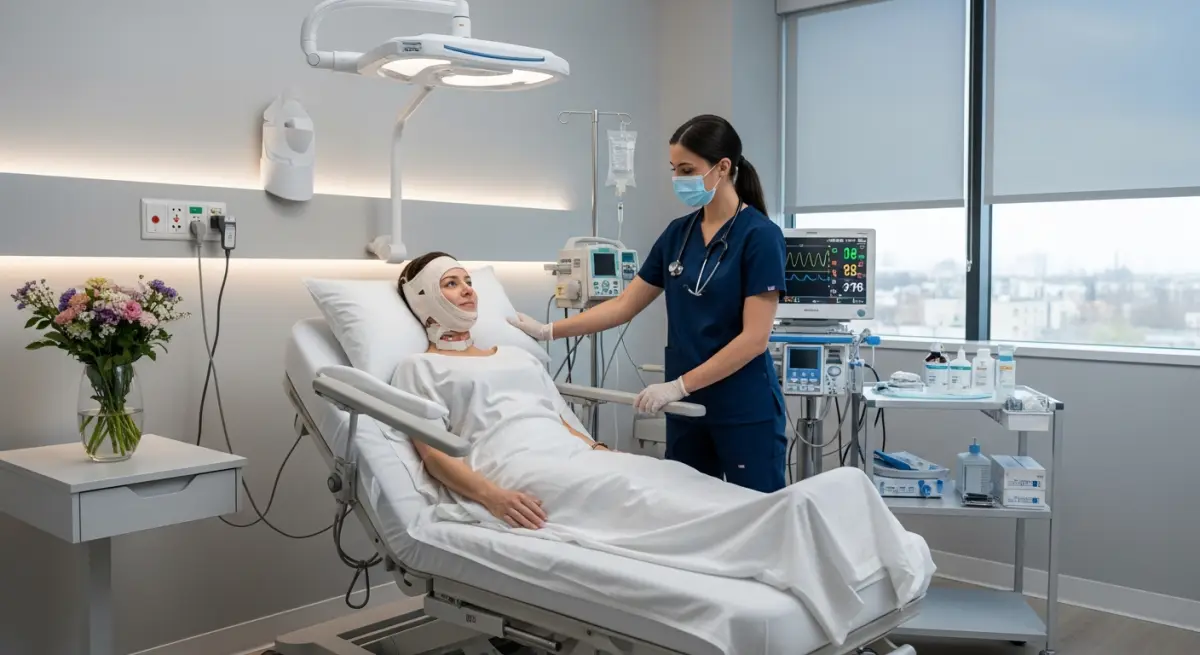
Arm lift recovery involves wearing compression garments on both arms continuously for 4–6 weeks. The first 3–5 days are the most uncomfortable due to swelling and wound tension; pain is typically manageable with oral analgesics. Drains, if placed, are removed at 3–5 days. Sutures are absorbable and require no removal. Arm mobility is restricted for the first 2 weeks — patients should avoid raising their arms above shoulder height and should not carry objects heavier than a cup of water during this period. Desk work resumes at 7–10 days; light gym (legs only) at 3 weeks; upper body exercise at 8 weeks.
For international patients, a minimum 7-day stay is recommended: arrival and consultation Day 1, surgery Day 2, Days 3–5 hotel rest with wound checks, Day 6 drain removal if applicable and wound assessment, Day 7 flight clearance. Most surgeons clear patients for economy flights (with aisle seat allowing arm movement) at 5–7 days post-surgery. A travel companion is highly recommended to assist with dressing management and daily activities during the first week of recovery.
Managing Scars
The inner arm scar is the central aesthetic trade-off in brachioplasty and deserves careful management. During the first 3 months, scars are pink, slightly raised, and widening is normal. Active scar management beginning at 4–6 weeks (when incisions are fully closed) makes a substantial difference: medical-grade silicone gel or sheets applied daily flatten and fade scars significantly. Sun protection of scars — applying SPF 50 whenever the inner arm is exposed — prevents permanent darkening of immature scar tissue during the first year. Massage of healed scars (once the wound has fully closed) improves their texture and reduces firmness. Most arm lift scars at 12–24 months are described by patients as 'acceptable' to 'barely noticeable' — particularly when arms are at rest.
Start your arm transformation journey with a free consultation from accredited body contouring surgeons abroad.
Consult Top SurgeonsFrequently Asked Questions
Will the scar be visible when wearing a sleeveless top?
The inner arm scar runs along the medial (inner) aspect of the arm and is not visible when arms are at rest at your sides — it becomes visible when arms are raised. Most patients describe the scar as easily concealable in most social situations and that it becomes progressively less noticeable over 12–24 months with proper scar care. The degree of visibility depends on individual healing characteristics, scar management adherence, and skin tone. Patients with darker skin tones may have more visible scarring and should discuss this with their surgeon during consultation.
Can I lose weight after arm lift surgery?
Yes, but significant weight loss after arm lift may cause some skin laxity to recur as the skin loosens again. Modest weight changes of 5–10 lbs typically do not significantly affect the result. For patients who still have weight to lose, many surgeons recommend achieving their goal weight first, then stabilizing for 6–12 months before considering arm lift surgery, to ensure the results are maintained long-term.
Is arm liposuction a substitute for arm lift?
Arm liposuction addresses fatty excess but does not remove skin — it may actually worsen the appearance of skin laxity in patients who already have loose skin. For younger patients with good skin elasticity, liposuction alone can provide excellent results. For patients with true skin redundancy (especially after significant weight loss), liposuction alone will not achieve the tightened contour that brachioplasty provides. A thorough consultation with pinch testing and assessment of skin elasticity will determine which approach is appropriate.
What is the minimum age for arm lift surgery?
There is no minimum age per se — the procedure is appropriate for adults of any age when medically indicated. However, patients should have stable weight and fully completed their weight loss journey before considering surgery. Very young patients (under 25) are generally counseled to exhaust non-surgical options first and to allow time for natural skin tightening that sometimes occurs after weight loss in younger patients with better skin elasticity.
How long before I can swim or exercise my upper body?
Swimming, with full arm movement, should be avoided for at least 6–8 weeks (until all incisions are fully healed and sealed, as water exposure can introduce bacteria to healing wounds). Upper body resistance exercise — weights, push-ups, pull-ups, swimming — should wait until 8 weeks when the subcutaneous tissue has healed adequately to withstand the tension generated by upper body exercise.