Modern Lung Cancer Treatment
Lung cancer treatment has undergone more transformation in the past decade than perhaps any other oncological field. The historic reality of lung cancer — that most patients were diagnosed at advanced stage and had limited treatment options — has been replaced by a landscape where molecular profiling guides treatment, targeted agents produce years of disease control, and immunotherapy achieves long-term remissions in patients previously considered terminal. Five-year survival rates for certain molecular subtypes of advanced lung adenocarcinoma have improved from under 5% to over 30% in clinical trial settings, representing one of the most dramatic improvements in any advanced cancer outcome.
The fundamental transformation in lung cancer care began with the discovery that approximately 15–35% of lung adenocarcinomas carry actionable genetic alterations — EGFR mutations, ALK rearrangements, ROS1 rearrangements, BRAF V600E mutations, MET exon 14 alterations, RET fusions, KRAS G12C mutations, and others — that are specifically targeted by highly effective oral medications. Osimertinib for EGFR-mutant NSCLC, alectinib for ALK-positive disease, and sotorasib for KRAS G12C have each shown dramatically superior outcomes compared to chemotherapy in clinical trials, with manageable toxicity profiles that allow patients to maintain quality of life far better than traditional cytotoxic chemotherapy.
Molecular testing — comprehensive genomic profiling of the tumor — is now considered standard of care for all advanced non-small cell lung cancers before initiating treatment. The testing should include at minimum: EGFR mutation analysis, ALK and ROS1 rearrangement testing, BRAF V600E testing, MET exon 14 mutation, RET fusion, KRAS G12C, PD-L1 expression level (for immunotherapy eligibility), and ideally a comprehensive next-generation sequencing (NGS) panel covering 300+ cancer-associated genes. Anadolu Medical Center in Istanbul — affiliated with Johns Hopkins Medicine — offers comprehensive molecular profiling through its advanced oncology laboratory, providing turnaround times of 7–14 days for NGS results that guide personalized treatment planning.

Targeted Therapy & Immunotherapy
Immunotherapy with immune checkpoint inhibitors — pembrolizumab (Keytruda), nivolumab (Opdivo), atezolizumab (Tecentriq), and durvalumab (Imfinzi) — has transformed treatment for patients without targetable mutations. For patients with high PD-L1 expression (≥50%), pembrolizumab monotherapy as first-line treatment achieves response rates of 45% and median overall survival of 30+ months, compared to 12–14 months with chemotherapy alone. Pembrolizumab plus platinum-doublet chemotherapy benefits patients regardless of PD-L1 expression level, and is now a global first-line standard for advanced NSCLC without targetable mutations.
The cost of immunotherapy represents one of the most compelling arguments for accessing treatment abroad. A single cycle of pembrolizumab costs $15,000–$25,000 in the US; the same drug at equivalent dosing costs $2,500–$5,000 per cycle in Turkey and India, typically from the same pharmaceutical manufacturers. For patients requiring 4–6 cycles as induction therapy followed by maintenance (up to 35 cycles), the total cost difference between US-based and internationally-based immunotherapy is $200,000–$500,000. Many patients choose to initiate immunotherapy abroad and then continue therapy through a home oncologist who prescribes the same agent at local costs, traveling abroad only for the initial comprehensive evaluation and treatment planning.
Targeted therapy oral medications — osimertinib, alectinib, sotorasib, and others — are available in many international countries at dramatically lower prices than US retail pricing, either through generic manufacturer programs or government-regulated pharmaceutical pricing. In India, generic versions of some targeted therapy agents are available at 5–15% of US brand costs, providing transformative access for patients who face unaffordable drug costs at home. The legal and regulatory aspects of purchasing medications internationally require careful navigation, and patients should consult both their treating oncologist and a legal/pharmaceutical advisor about this option.
Surgical Options: VATS & Robotic Surgery
For early-stage lung cancer (Stage I and II), surgery offers the best chance of cure, with 5-year survival rates of 60–90% for Stage IA disease. The surgical standard of care has evolved from open thoracotomy to minimally invasive video-assisted thoracoscopic surgery (VATS) and, increasingly, robotic-assisted thoracic surgery using the da Vinci system. VATS and robotic approaches access the chest through 3–4 small incisions (rather than a 15–25cm chest-opening incision), dramatically reducing pain, hospital stay, blood loss, and recovery time while achieving equivalent oncological outcomes for appropriate candidates.
Robotic thoracic surgery offers additional advantages over standard VATS — seven degrees of freedom of instrument movement (versus four for standard VATS), superior three-dimensional visualization, and tremor filtration — making complex anatomical dissections around vessels and airways more precise and safer. Leading cancer centers in South Korea, Germany, Turkey, and India have invested in da Vinci and other robotic platforms specifically for thoracic oncology. Asan Medical Center in Seoul — one of Asia's highest-volume cancer surgery programs — has performed over 10,000 robotic thoracic procedures, with 30-day mortality rates and complication profiles published in peer-reviewed journals that compare favorably with the world's top programs.
Cost Comparison by Country
Lung Cancer Treatment Cost Comparison 2025
| Treatment | Turkey/India | South Korea/Germany | USA |
|---|---|---|---|
| Robotic Lobectomy (Surgery) | $15,000 – $25,000 | $25,000 – $45,000 | $60,000 – $100,000 |
| SBRT Radiation (5 fractions) | $8,000 – $15,000 | $15,000 – $25,000 | $30,000 – $50,000 |
| Immunotherapy (per cycle) | $2,500 – $5,000 | $5,000 – $9,000 | $15,000 – $25,000 |
| Targeted Therapy (monthly) | $1,500 – $4,000 | $3,000 – $6,000 | $12,000 – $20,000 |
| Chemotherapy (per cycle) | $1,500 – $3,500 | $3,000 – $6,000 | $8,000 – $15,000 |
| Comprehensive 2nd Opinion | $500 – $1,500 | $1,000 – $2,500 | $2,000 – $5,000 |
Treatment costs vary significantly based on cancer stage, molecular profile, and individual treatment protocol. These are approximate ranges for planning purposes. A comprehensive treatment plan with specific cost projections is provided after medical record review.
The most significant cost savings for lung cancer treatment are available in Turkey and India — both offering comprehensive oncology services at 60–75% below US costs. Turkey's cancer centers, including Anadolu Medical Center (Johns Hopkins affiliate, ESMO and OECI designated) and Memorial Hospital Group (ESMO accredited), offer multidisciplinary tumor boards, comprehensive molecular testing, immunotherapy, robotic surgery, and stereotactic radiotherapy within internationally accredited environments. India's Apollo and Medanta hospital groups have developed reputation-defining oncology programs attracting patients from across the Middle East, Africa, and Southeast Asia.
Getting a Second Opinion Abroad
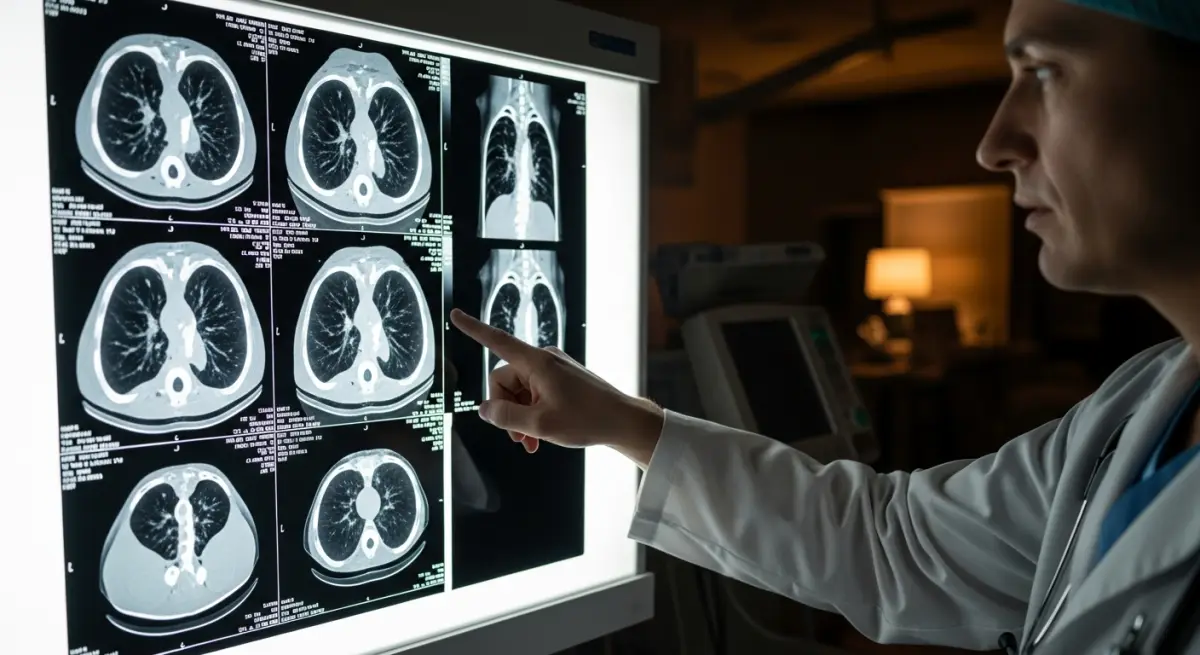
A medical second opinion from an international cancer center — obtainable remotely without traveling — can be one of the most valuable steps a lung cancer patient takes, and is one of the most accessible forms of medical tourism for oncology. Leading international cancer centers accept medical record packages (imaging files, pathology reports, molecular testing results, treatment history) by email and provide written expert opinions within 1–2 weeks, typically at a cost of $500–$2,000. These opinions may confirm your current treatment plan, suggest modifications, recommend additional testing, or identify clinical trial opportunities that your home team has not considered.
A significant proportion of lung cancer second opinions result in meaningful changes to the treatment plan. Studies from major cancer centers show that 15–25% of patients seeking second opinions receive recommendations that change their treatment — including identification of molecular testing that was not initially performed, recognition of a treatable target not previously detected, upgrade or downgrade of staging that changes surgical eligibility, or enrollment in a clinical trial not available at the original institution. Given the stakes involved in cancer treatment, the $500–$2,000 investment in an international second opinion is among the highest-value medical decisions a patient can make.
Don't face lung cancer alone. Connect with world-class oncology teams abroad for a second opinion or full treatment plan.
Get My Oncology Second OpinionFrequently Asked Questions
Should I start treatment in my home country while exploring options abroad?
If your cancer requires urgent treatment, do not delay starting therapy while planning international treatment. For many lung cancers (particularly symptomatic or rapidly progressing disease), starting chemotherapy or targeted therapy locally while arranging international consultation is the safest approach. For patients with more indolent disease or seeking elective procedures (second opinion, elective surgery for early-stage disease), taking 2–4 weeks to arrange international consultation before committing to a treatment plan is appropriate. Always discuss the urgency of starting treatment with your oncologist.
How do I send my medical records for international review?
Most international cancer centers have dedicated online portals or patient coordinators who accept medical record submissions. You will need: all imaging in DICOM format (the digital imaging files from your scans, not printed films), pathology reports with immunohistochemistry and molecular testing results, a clinical summary from your treating oncologist, and any treatment records if you have already received treatment. CT and PET scans are stored as DICOM files on CD or USB from your hospital radiology department. MRI files may need to be requested separately. Coordinate with the international center's patient coordinator who will guide you through exactly what is needed.
Is it safe to fly when undergoing lung cancer treatment?
Flying while receiving lung cancer treatment is generally safe when disease is stable and treatment-related side effects are well-controlled. Patients with significant pleural effusion, respiratory compromise, active infection, or severe treatment toxicity should avoid long flights until these are resolved. DVT risk is elevated in cancer patients, making compression stockings and frequent walking during flights important. Discuss your specific flight plans with your treating oncologist, who can assess your fitness to fly based on your current disease status and treatment.
What is SBRT and is it available abroad?
Stereotactic Body Radiotherapy (SBRT, also called SABR) delivers ablative doses of highly focused radiation to small lung tumors in 3–5 large fractions over 1–2 weeks, achieving local control rates of 85–95% for Stage I NSCLC — equivalent to surgical resection in medically inoperable patients. It is an excellent option for elderly or medically unfit patients who cannot undergo surgery. SBRT is widely available at internationally accredited radiation oncology centers in Turkey, India, South Korea, Germany, and Spain at 50–70% below US pricing. Treatment duration of 1–2 weeks makes it particularly accessible for international medical tourism.
Are clinical trials available at international cancer centers?
Yes — many internationally accredited cancer centers participate in international clinical trials, including Phase II and Phase III trials sponsored by multinational pharmaceutical companies. Patients enrolled in international trials access investigational therapies at no drug cost and receive care according to rigorously monitored protocols. Ask the international cancer center specifically whether there are open trials matching your diagnosis and molecular profile. Clinicaltrials.gov (for US-registered trials) and WHO's International Clinical Trials Registry allow you to search for trials by location.